

Strategic reading for researchers is an essential skill in today's fast-paced academic environment. This approach empowers researchers to efficiently absorb information, thereby enhancing research productivity. By focusing on effective comprehension strategies, this article will explore various techniques that facilitate deeper understanding and retention.
Through strategic reading, researchers can better navigate vast amounts of literature, allowing them to focus on innovation and exploration within their fields. These advantages not only save time but also significantly contribute to the quality of academic work, enabling accelerated comprehension of complex materials, enhanced ability to identify relevant information quickly, and improved organization and management of research findings.
Strategic Reading for Researchers
Strategic reading involves a deliberate and organized approach to reading, aimed at enhancing comprehension and information retention. For researchers, this means tailoring reading practices to suit specific academic goals, ensuring they absorb pertinent data efficiently.

A strategic reading framework is built on several key components:
- Purposeful Engagement: Researchers should define clear objectives before diving into any text. Understanding the purpose—whether it is to gather background information, analyze data, or draw conclusions—guides the focus and depth of reading.
- Active Interaction with Texts: Engaging actively with material through questioning, annotating, and summarizing helps in digesting complex information. This interaction fosters critical thinking and aids in distinguishing between essential facts and supplementary details.
- **Adaptation to Text Type: **Different genres demand different strategies. Narrative texts might require a focus on storyline and context, whereas expository texts benefit from an emphasis on structure and argumentation.
In academic contexts, purposeful reading not only enhances efficiency but also enriches the quality of research output. By aligning reading efforts with research goals, scholars can streamline their workflow, reduce redundancy, and ensure that their academic pursuits are both effective and meaningful.
The Reading Process Stages and Effective Comprehension Strategies
Effective reading involves navigating through distinct stages, each crucial for maximizing comprehension and retention.
- Preliminary Stage: This initial phase emphasizes skimming to grasp the overarching themes of the material. Identify main ideas by perusing headings, abstracts, and summaries.
- In-Depth Stage: Dive deeper into the content, focusing on details and arguments. This stage is vital for understanding complex concepts and making connections across different sections of the text.
- Critical Stage: Engage with the material critically by questioning its arguments, evaluating evidence, and reflecting on its implications. This level of reading fosters a deeper understanding and allows you to form well-supported conclusions.
By understanding these stages and employing tailored comprehension strategies, researchers can enhance their reading efficiency and deepen their engagement with scholarly articles.
Pre-Study Techniques for Enhanced Focus and Time Management
Effective time management is crucial for researchers aiming to absorb vast amounts of information efficiently. By strategically planning reading sessions, researchers can optimize their focus and productivity. Consider setting specific time blocks dedicated solely to reading tasks, allowing you to immerse yourself without the pressure of multitasking.

Creating an optimal study environment plays a significant role in enhancing concentration. Adjust your surroundings to minimize distractions:
- Quiet Spaces: Select locations with minimal noise or interruptions.
- Comfortable Setup: Ensure ergonomic seating and good lighting to prevent fatigue.
- Digital Organization: Use apps like Forest or StayFocusd to limit access to distracting websites.
Furthermore, mastering personal knowledge management can significantly amplify the effectiveness of these strategies. By leveraging advanced tools and techniques in personal knowledge management, researchers can boost productivity, enhance learning, and manage their knowledge more effectively.
Reading Methods: SQ3R, PQ4R, and Feynman Technique
Enhancing Understanding with the SQ3R Method

The SQ3R method is a strategic approach designed to streamline reading processes and enhance comprehension. It consists of five stages:
- Survey: Skim the material to grasp main ideas.
- Question: Formulate questions based on headings and subheadings.
- Read: Go through the text thoroughly, seeking answers to your questions.
- Recite: Summarize key points in your own words.
- Review: Consistently revisit the material to reinforce understanding.
This method encourages active engagement with the text, promoting deeper learning.
Deepening Insight through the PQ4R Method

The PQ4R method builds upon traditional reading techniques by integrating additional reflective steps:
- Preview: Scan the text for an overview.
- Question: Develop questions about the content.
- Read: Delve into the text, looking for answers.
- Reflect: Contemplate what has been learned and its implications.
- Recite: Verbally summarize key concepts.
- Review: Regularly go over the material to solidify knowledge.
By fostering a reflective mindset, this approach enhances retention and comprehension.
Simplifying Concepts with the Feynman Technique
The Feynman technique, inspired by physicist Richard Feynman, involves explaining complex concepts in simple terms. This method is particularly effective for identifying gaps in knowledge:
- Choose a topic and explain it as if teaching someone unfamiliar with it.
- Identify any areas of confusion and revisit those sections of the text.
- Simplify explanations further until clarity is achieved.
Utilizing these methods collectively optimizes reading efficiency and comprehension, paving the way for successful research endeavors.
Note-Taking Techniques: Cornell Method vs. BEAM Method
Effective note-taking strategies are crucial for absorbing and retaining information. Two prominent methods, the Cornell method and the BEAM method, offer structured approaches that enhance comprehension.
Cornell Method
- Structure: The page is divided into three sections: cues, notes, and summary.
- Process:
- Notes section: During lectures or reading, jot down main ideas and details.
- Cues section: Afterward, fill this margin with keywords or questions.
- Summary section: At the bottom, write a concise summary of the material.
This method encourages active engagement with the content by prompting students to periodically review and summarize their notes.
BEAM Method
- Structure: Focuses on categorizing information into Background, Exhibit, Argument, and Method.
- Application:
- Background: Contextual information necessary for understanding.
- Exhibit: Data or examples supporting arguments.
- Argument: Claims made within the text.
- Method: Techniques used in analysis or research.
The BEAM method fosters deeper understanding by organizing notes according to their role in building an argument.
Enhancing Note-Taking with AI Tools
To further improve retention and comprehension, consider leveraging technology. Using a best AI note-taking app, for instance, can streamline the note-taking process. These apps not only help in organizing information effortlessly but also make retrieval of insights more efficient.
Additionally, adopting a best PKM setup with AI can significantly enhance personal knowledge management. This setup boosts productivity by allowing users to efficiently manage and organize their personal knowledge base.

However, it's essential to understand why traditional document-based note-taking methods are becoming obsolete. As discussed in this article about why we should move away from document-based note-taking, these outdated methods often hinder effective information management and retrieval.
Regularly reviewing these structured notes can significantly solidify knowledge, making both methods invaluable tools for researchers aiming to boost retention and comprehension.
Strategic Reading Approaches: Skim Reading, Scan Reading
Skim Reading and Scan Reading are invaluable techniques for researchers aiming to quickly determine the relevance of academic texts. By skimming abstracts and conclusions, researchers can swiftly glean the core ideas and results without delving into the entire document. This approach saves time, allowing researchers to allocate their attention to more pertinent material.

When assessing the quality of research articles, it is crucial to evaluate aspects such as the methodology used, the credibility of sources cited, and the author's qualifications. This ensures that only high-quality information informs your work.
Additionally, leveraging advanced productivity techniques can significantly enhance research efficiency. For instance, incorporating elements from the Zettelkasten method allows researchers to create a personal knowledge base that improves information retention and retrieval. Furthermore, adopting strategies from a well-structured productivity system can lead to a substantial increase in output while maintaining work-life balance.
Utilizing Mind Mapping, Spaced Practice, and Physical Activity
Mind mapping is an effective tool for researchers and readers aiming to improve comprehension and retention. By visually organizing information, it simplifies complex ideas and highlights interconnections. This approach creates a structured framework for understanding intricate concepts, enhancing the ability to recall key details and relationships during later stages of learning or research.
Physical exercise is closely linked to improved cognitive performance. Engaging in physical activity before reading or studying can boost focus, enhance memory, and lower stress. Increased blood flow to the brain facilitates deeper processing of material, making learning sessions more productive. Simple activities like walking or stretching can prepare the mind for better information absorption and long-term retention.
Spaced practice—breaking study sessions into intervals over time—promotes durable learning. Instead of cramming, spacing out reading or study sessions encourages the brain to revisit and reinforce material, strengthening neural connections and preventing forgetting. Strategic readers benefit from this method by ensuring information is revisited in manageable, structured doses.
How Constella.App Elevates Strategic Reading
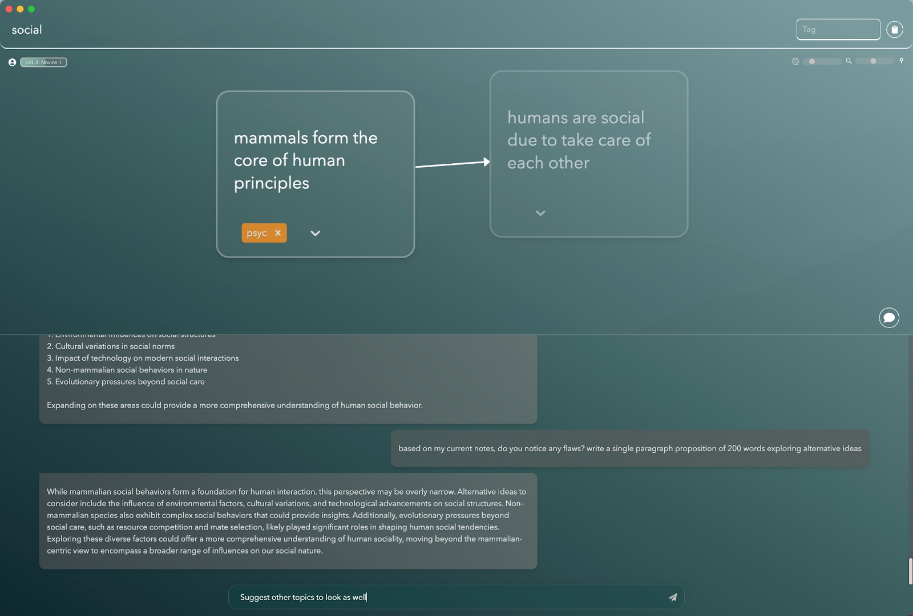
Constella.App introduces features like the Infinite Graph, Stella AI Chat, and Jotting View, which significantly aid strategic reading:
- Infinite Graph: This feature allows users to create visual maps of their reading notes, mirroring mind-mapping techniques for a seamless integration of ideas and connections.
- Stella AI Chat: Acting as a personal reading assistant, Stella can clarify concepts, summarize information, and provide deeper insights, making reading more interactive and engaging.
- Jotting View: A dynamic tool for capturing and organizing thoughts in real-time, perfect for color-coded or categorized notes to enhance recall.
By integrating these scientifically supported methods with cutting-edge features, Constella.App empowers readers to maximize their learning efficiency, turning reading sessions into highly productive and engaging experiences.
Conclusion
Strategic reading for researchers is key to improving research skills and efficiently finding relevant academic information. Embracing the strategies discussed can transform your approach to reading and enhance productivity.
Tools like Constella.App offer innovative solutions for organizing thoughts. As a next-generation tool, it allows users to create an infinite graph where ideas are recorded swiftly and remembered for future reference. This dynamic visual graph fosters creative engagement with your research topics, making it easier to surface related notes as you type on a visual canvas.
By integrating these strategies and tools, such as the AI-powered note-taking assistant Constella, you can elevate your research capabilities, ensuring that each reading session is both purposeful and productive.
FAQs (Frequently Asked Questions)
What is strategic reading and why is it important for researchers?
Strategic reading refers to a purposeful approach to reading that enhances comprehension and retention of information. For researchers, it is crucial as it improves research productivity by allowing them to effectively engage with scholarly articles and extract relevant information efficiently.
What are the stages of the reading process and how do they contribute to comprehension?
The reading process consists of three stages: preliminary, in-depth, and critical reading. Each stage plays a vital role in enhancing comprehension; preliminary reading helps identify key themes, in-depth reading allows for thorough understanding, and critical reading promotes evaluation of the material's quality and relevance.
What are some effective techniques for managing time while studying?
Effective time management techniques include creating a structured study schedule, minimizing distractions, and adjusting the study environment to enhance focus. Additionally, incorporating breaks and prioritizing tasks can significantly improve overall reading efficiency.
How can methods like SQ3R and PQ4R improve my reading efficiency?
SQ3R (Survey, Question, Read, Recite, Review) and PQ4R (Preview, Question, Read, Reflect, Recite, Review) are systematic approaches that help simplify complex texts. They encourage active engagement with the material through questioning and summarizing, which enhances understanding and retention.
What note-taking methods are recommended for better retention?
The Cornell method and BEAM method are two effective note-taking strategies. The Cornell method involves dividing notes into summaries and cues for easier review, while BEAM focuses on categorizing information into different types (Background, Synthesis, Evidence, Analysis) to enhance comprehension. Regular review of notes is essential for solidifying knowledge.
How can I use visual aids like mind mapping to enhance my reading experience?
Mind mapping is beneficial for organizing thoughts visually, which aids in comprehension and retention. Utilizing color-coded notes can also enhance memory recall. Furthermore, engaging in physical activity before studying has been shown to improve cognitive performance by reducing stress levels.
Want more insights like this?
Subscribe to get short productivity tips and useful summaries of new tools every week.
Want more insights like this?
Subscribe to get short productivity tips and useful summaries of new tools every week.


