

Consider you’ve just read an incredible article. The content sparks many ideas for a project you’re working on. You plan to return to it later, but life gets busy, and a few days later, when you finally have time to pick up where you left off, you can’t find the article. Worse, you can’t even remember what it was about or the main points that intrigued you.
If only you’d had a free AI note-maker to help you capture your notes and ideas so you could recall the information instantly. Personal knowledge management tools help people organize and remember information to avoid these frustrating situations. This guide will explore a variety of tools to assist with this process, especially AI note-taking tools.
AI notes manager from Constella is an excellent place to start. This free AI note-maker helps you capture, organize, and recall information you find online to get back to business quickly and avoid the dreaded information overload.
What is Personal Knowledge Management

Personal knowledge management (PKM) is the organized method to gather, sort, and make sense of the massive amounts of information that come your way in daily life. You can capture valuable information from the internet, books, conversations, and the world around you. You can share it with others by organizing it into easily digestible pieces, distilling the most relevant bits, and expressing your knowledge creatively. PKM is a cycle of continually evolving steps known as CODE.
1. Storing Information
At this stage, you’ll likely rely on traditional software programs on your computer and apps on your mobile device to receive, edit, and send information (such as via email, calendars, or a web browser). You might have a basic understanding of how these programs work and feel comfortable using them daily. Organizing your files using defaults suggested by the software, like having a Documents folder with subfolders inside, is common.
You may not always feel comfortable saving files because you’re unsure how or when you’ll see them again, but you’ll feel reasonably confident that you can find your most important files when needed. Taking notes sparingly on your smartphone or mobile device might be your go-to for one-time practical tasks like keeping a grocery list, meeting or phone call notes, or saving bookmarks from websites. Occasionally, you might save notes from sources like books or podcasts, but you might not do much with them.
2. Managing Knowledge
At this stage, you begin capturing factual information, ideas, and creative inspiration: lessons you’ve learned, ideas you’ve had, quotes that resonate, connections between ideas, metaphors, analogies, observations, and personal reflections. This includes both ideas from your thoughts and external sources. You’ll develop a strong command of how and where to save files, giving you the confidence to invest time and effort into writing down what you know.
Digital note-taking might become a significant part of your daily life, and you’ll enjoy capturing information from various sources such as documents, books, articles, photos, drawings, screenshots, business cards, videos, or recipes. You won’t just consume information on your devices like everyone else—you’ll capture the best of what you find in your library of knowledge.
Your notes can start working as a thought partner, reminding you of things you’ve forgotten entirely and surfacing unexpected connections between ideas. The emphasis will shift from capturing more information to putting the knowledge you already have to use. You might regularly refine your knowledge management tools and experiment to discover better ways of doing things. Maintaining your system could free up more time and energy than it takes to maintain.
You’ll likely feel more focused because you know that everything necessary is reliably saved. Understanding how information flows through your system and becomes tangible deliverables will feel empowering.
3. Enabling Action
At this level, your attention shifts from the world of ideas to the world of action. Generating insights won’t satisfy you anymore—you’ll want to see those insights manifest in the real world. You’ll likely use your insights to improve your learning, health, career, business, and society.
You may become more discerning and selective about the information you consume, strongly preferring high-quality, substantive sources directly related to your goals. Using your notes, you’ll take on more ambitious, complex projects than you could manage alone.
You might find yourself more productive, creative, and relaxed than you would otherwise be. At this stage, you’ll apply as much creativity to the workings of your system as to the knowledge it contains. Surprising yourself with creative ways of using your notes or discovering how they push your thinking in new directions may become common. Thanks to the incredible leverage it provides, you’ll integrate your knowledge management system deeply into your work and thinking.
Your system’s benefits may extend beyond personal goals, impacting the people around you. You could attract new opportunities and collaborations by making your most valuable knowledge available to others—through a website, blog, social media feed, podcast, or product. With others, you might surface solutions or promising leads to challenges within seconds or minutes. Trusting your system might bring excitement and inspiration to your work.
By taking in any information, breaking it into small pieces, and preparing it for quick retrieval in future projects, you’ll gain confidence that your system has everything you need for whatever you want to pursue.
4. Personal Knowledge Mastery
The final level is an infinite horizon of possibilities. Your knowledge could evolve into a system greater than the sum of its parts, pulling in new material almost effortlessly and sorting and distilling it to support your long-term projects and goals. With a continuous output from your "Second Brain," you’ll create documents, essays, summaries, designs, videos, presentations, and more. You’ll use these artifacts to make persuasive arguments, recruit people to your cause, and build a strong reputation for innovation and leadership.
As your system continuously evolves, it may require only occasional intervention. Your tools could work smoothly together to produce creative breakthroughs reliably. With your work-in-process managed outside your head, you might focus entirely on whatever attracts your attention, progressing despite interruptions. Not only will you acquire knowledge, but you’ll also develop new skills and capabilities. You may accumulate a priceless store of intellectual capital and an encyclopedia of tacit and experiential knowledge unique to you. This tacit knowledge could allow you to solve problems others can’t imitate.
Eventually, you might master the flow of information inside you—your innermost thoughts, feelings, intuitions, and desires. By using your system to study your inner workings, you’ll track patterns in your thinking and learning over time, helping you intentionally direct your growth. The beauty and elegance of your system could leave you in awe of its capabilities, knowledge, and interconnectedness.
Related Reading
Types of Personal Knowledge Management Tools

1. Knowledge Bases: A Centralized Repository For Information
Knowledge bases serve as a centralized repository where internal and external information can be stored, organized, and easily accessible. They answer common questions, troubleshoot problems, and comprehensive documentation. Knowledge-based tools also provide self-service, lowering the burden on the support team.
2. Learning Management Systems (LMS): A Hub For Employee Training And Development
Learning management systems open the doors for professional development and learning. They enable the storage and delivery of educational courses and training programs through quizzes, lessons, classes, and other materials. The tools further help track the progress and performance of the learners, whether a large number of people in the organization use them.
3. Document Management Software: Organizing Business Information Securely
The document management software-based knowledge management tool is designed to create, store, and control data and documents across the organization. They ensure easy access to the content while confirming their end-to-end security. The tools offer organization to a great extent, facilitating easy retrieval and smooth team collaboration over documents.
4. Content Management System (CMS): Building Blocks For Knowledge Management
Content Management Systems allow an organization to create, manage, and modify digital content on the company’s intranet. The tools also enable users to publish web content without technical knowledge of building a website from scratch with codes. The CMS tools contain all those basic infrastructure stuff like templates so that one can focus more on the forward-facing structure of managing data over the website.
Constella: The Future of Note-taking
Constella reimagines note-taking with an infinite canvas that lets you capture and connect ideas effortlessly, powered by AI search that makes finding information instantaneous. Whether you're a researcher trying to draw connections across numerous papers or someone who wants a more intuitive way to organize your thoughts and files, Constella's AI assistant helps you build and navigate your knowledge base without the constraints of traditional folder structures.
Constella transforms how you capture, find, and connect your ideas, perfect for busy knowledge workers and researchers limited by conventional note-taking tools. Research 10 times faster with Constella's AI notes manager.
Benefits of Using Personal Knowledge Management Tools

The Modern World Is Getting More and More Complicated
Information overload can feel like drowning in a sea of data, especially in today's fast-paced world. The constant stream of innovations, research, and best practices can be overwhelming. As knowledge workers, lifelong learners, and members of modern society, we must adapt to this new reality.
We must stay on top and adapt quickly by excelling at critical, deep, and creative thinking. That’s the only way we can cope with the burden and noise of the modern world. Personal Knowledge Management (PKM) in particular and Knowledge Management (KM) in general are part of the solution. They can help us become better humans.
We Need to Get Our Thoughts Out of Our Heads
Most knowledge workers and lifelong learners rely heavily on their brains to retain information. It is quite a sad state of affairs because human brains are unreliable... As a slowly aging lifelong learner (I'm almost 40), I've realized that my memory is less and less trustworthy. What used to be easy to recall becomes more arduous, and memorizing new information is slowly becoming more and more difficult. This is bound to worsen over time!
Externalizing Our Thoughts Makes It Easier to Cope with Complexity
Human brains are incredible, but they are mainly optimized for and focused on survival. Our mental "knowledge management" and "knowledge organization" systems are not for deep thinking. One obvious limitation we have is our tiny short-term memory. It's impossible to retain more than a few items at a time in our short-term memory, making it impossible to think deeply about interconnected ideas and their relationships. We have no choice but to externalize our thinking to feel deeply.
One way of externalizing our thinking is by writing things down. Writing is thinking. Another approach is to create visualizations (e.g., mind maps), drawings, etc. Whenever I write an article, I think much more deeply about the ideas I'm covering than I'd be able to if I were only using my brain.
Logical thinking and analysis lead to thoughts, observations, ideas, and conclusions, but storing the intermediary results of our mental processes is almost mandatory. That's why having Post-It notes and/or whiteboards is so helpful for brainstorming sessions! Without this, we would forget most of the interesting things we come up with, and we wouldn't be able to go further. But there's more!
Writing down our ideas and thoughts on paper or using digital tools enables deep thinking. Once ideas are in front of our eyes, whether on a wall with Post-It notes, on an infinite canvas, or in a note-taking tool such as Obsidian, it becomes much easier to go deeper on any topic we are exploring, as we can see the ideas in front of us and explore different aspects/topics/subtopics.
Finally, once you accept that it's helpful to externalize your thinking, the next step is to consider this a habit to create and maintain. This brings us to Personal Knowledge Management (PKM), which is focused on the idea that we can make personal knowledge bases for ourselves and leverage those to think better.
30 Best Personal Knowledge Management Tools
1. Constella
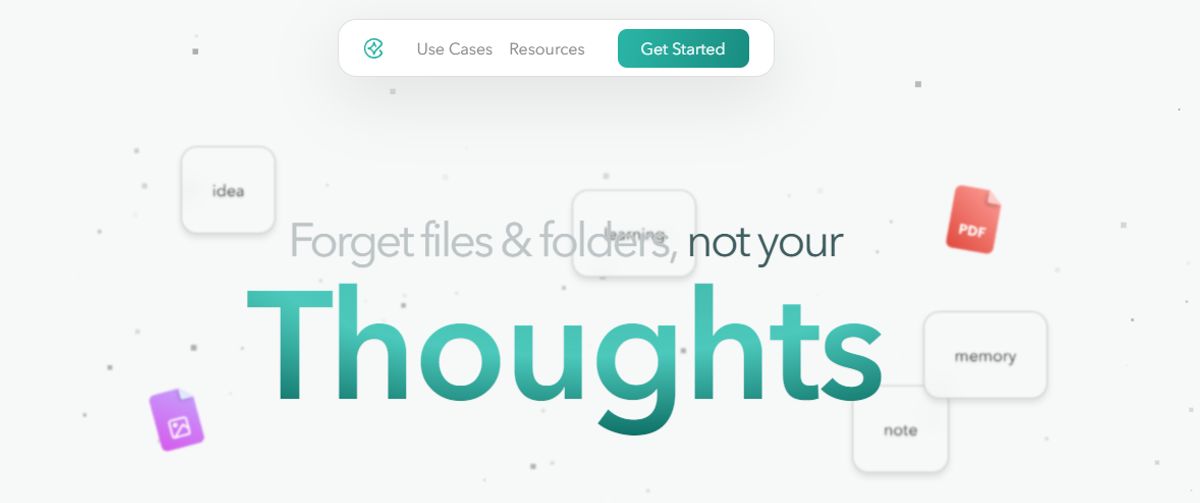
Constella transforms how we take notes. It offers an infinite canvas to capture and connect ideas effortlessly. Constella's AI search makes finding information instantaneous so that you can research and organize your thoughts without distraction. Whether you're a researcher trying to draw connections across numerous papers or someone who wants a more intuitive way to organize your thoughts and files, Constella's AI assistant helps you build and navigate your personal knowledge base without the constraints of traditional folder structures. Constella transforms how you capture, find, and connect your ideas, perfect for busy knowledge workers and researchers. Research 10 times faster with Constella's AI notes manager.
Best Features
- Infinite canvas for limitless note-taking and organization.
- AI searches to find information quickly.
- Rich media support for text, images, files, links, etc.
2. Notion
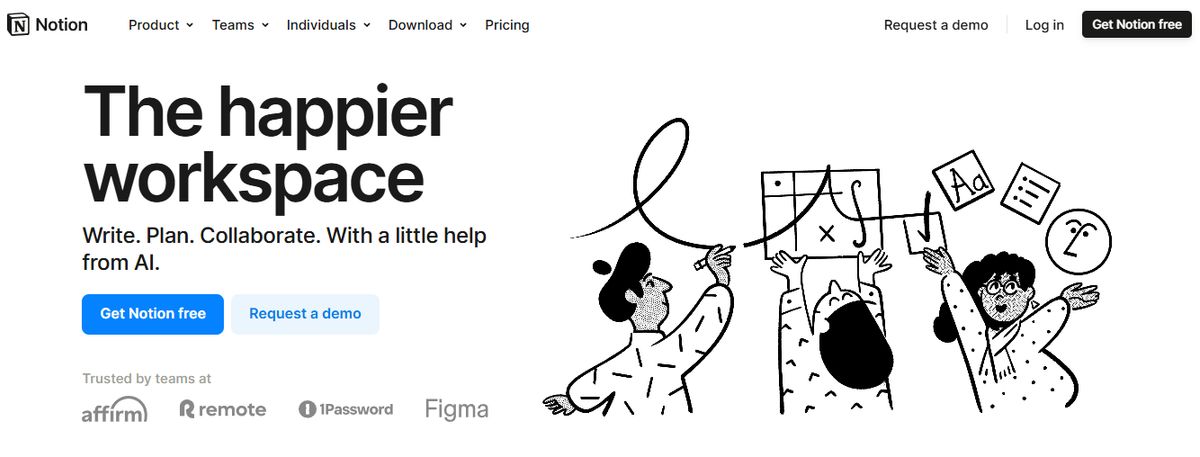
Notion is an all-in-one personal knowledge management tool for teams and organizations. It helps you collectively build a simple and useful knowledge base with your team. In addition to text, it allows you to add or drag and drop images, videos, audio files, and even link pages in your knowledge base. From managing client data and brainstorming ideas to tracking project milestones, Notion AI makes finding relevant information from your base easy. I also love how the AI writing tool provides note-editing and summarizing capabilities to enhance your knowledge base.
Best Features
- Share knowledge, assign tasks, and collaborate in real-time with built-in tools for teams and projects.
- Create and link structured databases to manage projects, track clients, and organize resources.
- Access 20,000+ templates for creating company wikis, meeting notes, etc.
Limitations
- Limited functionality without an active internet connection hinders productivity during travel or outages.
- Using Notion’s mobile app might feel clunky and slow.
3. Bear
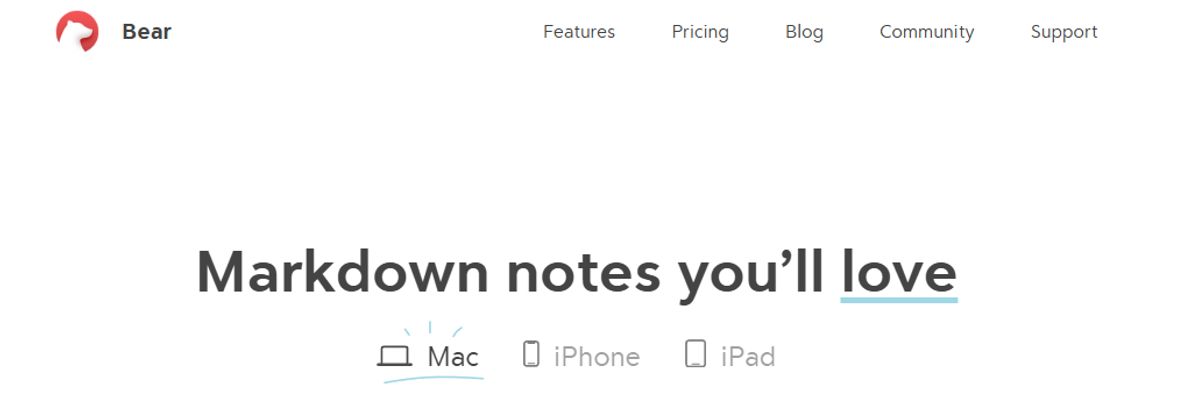
Bear is a flexible note-taking app for macOS and iOS that features rich text editing, organization tools, and markdown support. Users can create notes in various formats, including text, images, links, and files, and organize them using tags, folders, and search functionality. Bear also offers themes, focus mode, and encryption for secure note-taking.
Best Features
- Elegant, distraction-free interface for focused note-taking.
- Flexible organization with tags and nested tags.
- Supports markdown for easy formatting and customization.
4. Tettra
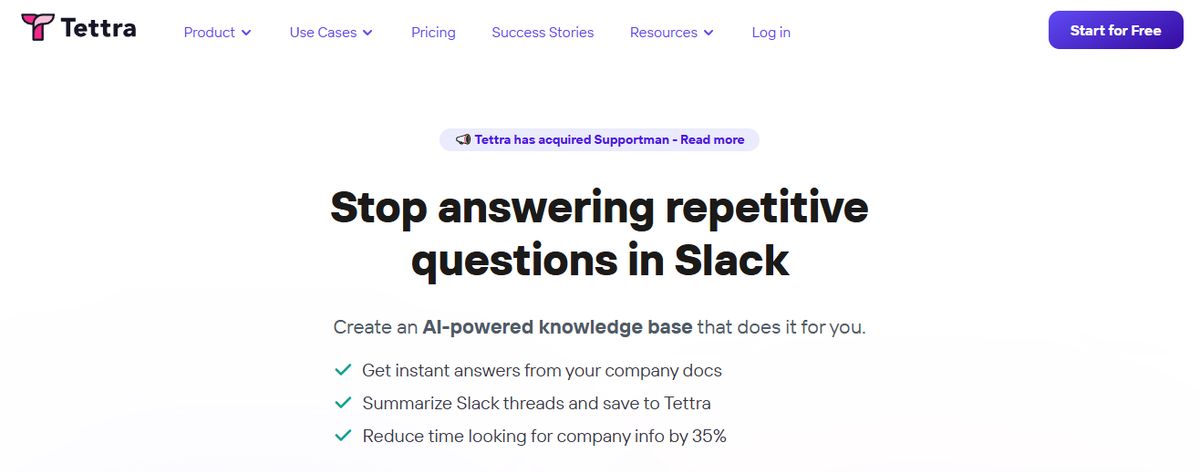
Tettra is a good software for building a centralized knowledge base and managing overall company knowledge. With Tettra’s simple editor, you can create new documentation or export existing content from tools like Google Docs, Notion, etc. Suitable for growing organizations, Tettra offers features such as AI-driven content suggestions and verification workflows to maintain accuracy and public knowledge-sharing capabilities.
Best Features
- Get answers to team questions from Tetra’s AI assistant, Kai.
- Verify content on a set schedule with the help of subject matter experts through knowledge automation.
- Add media and cross-link files within the knowledge base.
Limitations
- Provides limited formatting features compared to other personal knowledge management tools.
- Users may find the Professional subscription too expensive.
5. Workflowy
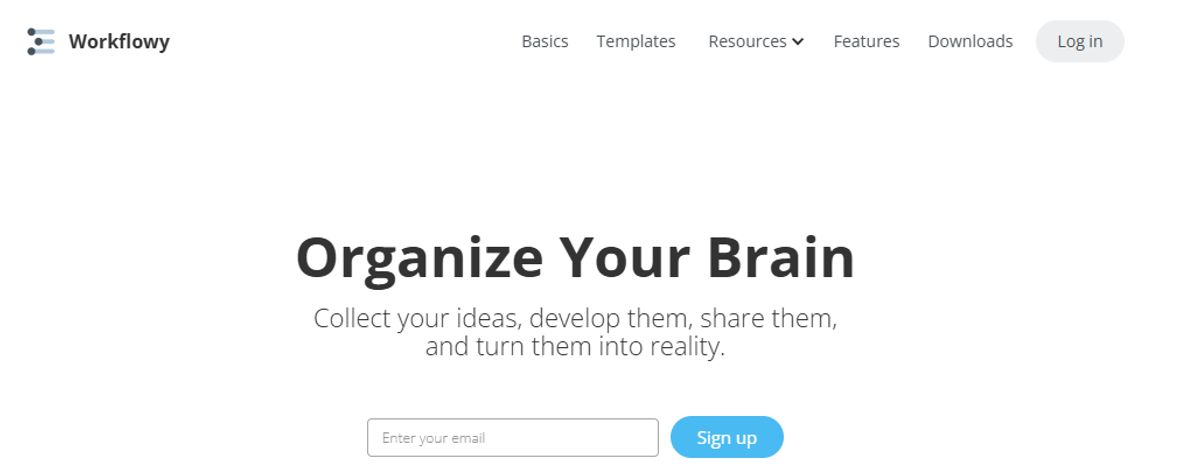
Workflowy is a simple yet powerful outlining tool that helps users hierarchize their thoughts and ideas. Users can create lists and sublists to break down complex concepts into manageable chunks and easily rearrange and expand them. Workflowy also offers features like tags, search functionality, and collaboration tools for sharing and editing lists with others.
Best Features
- Intuitive outlining interface for easy note organization.
- Supports nested lists for hierarchical note-taking.
- Tagging and robust search functionality.
6. Evernote
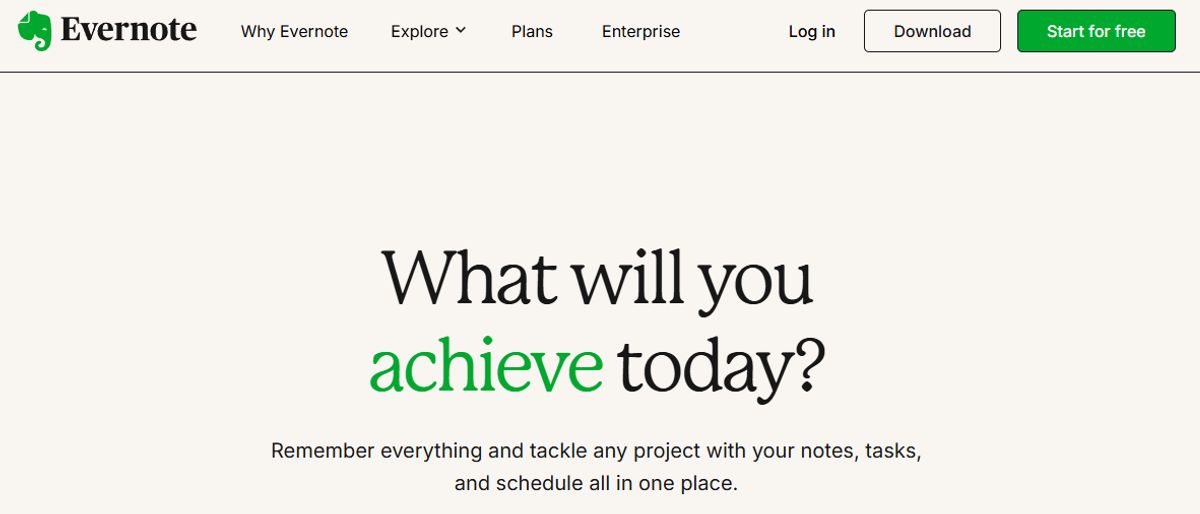
Evernote is a comprehensive personal knowledge management (PKM) and note-taking tool designed to help professionals capture, organize, and access information smoothly across devices. As the name suggests, it lets you jot down random thoughts and store important files and documents to develop a knowledge base. What I like about Evernote is its functionality to record audio notes for personal and professional purposes.
Best Features
- Digitize physical documents directly into Evernote to easily access relevant documents, papers, and lists.
- Quickly locate information within your notes using natural language queries.
- Easily sync information across devices to access it anytime from anywhere.
Limitations
- Some users find the mobile app less user-friendly than the desktop version.
- The free version offers a limited storage capacity.
7. Devonthink

Devonthink is a document and information management tool for macOS that helps users collect, organize, and search their files and notes. Users can import documents, emails, web clippings, and more into Devonthink and manage them using folders, tags, and metadata. Devonthink also offers features like AI-powered searching, smart groups, and synchronization across devices for easy access to information.
####Best Features
- Flexible organization with folders, tags, and smart groups.
- AI search for advanced document retrieval.
- Sync across devices for smooth access to information.
8. Obsidian
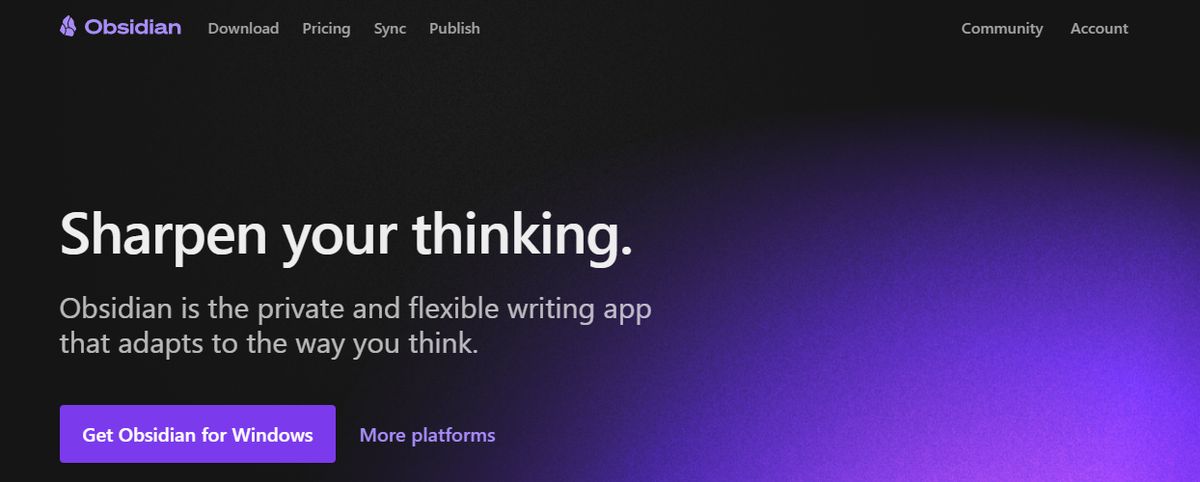
Obsidian is a powerful, markdown-based personal knowledge management (PKM) tool designed to help students effectively organize and connect their ideas. The app lets you jot down notes and graphically visualize their relationships. Whether building a personal wiki, creating mind maps, or developing a second brain, Obsidian offers unparalleled flexibility and control, making it a standout choice for students seeking to better their productivity and learning. Apart from building a personal knowledge base and wiki, I also like how Obsidian doubles as knowledge-sharing software, letting you publish personal wikis securely on the web.
Best Features
- Brainstorm, research, and map out your ideas with the Canvas feature.
- Extend functionality with community-created plugins or personalize the interface to match your workflow and preferences.
- Keep your data secure on your device and access it anytime, even without an internet connection.
Limitations
- Extensive customization options and markdown syntax may feel overwhelming for beginners.
- Obsidian focuses on individual workflows with no built-in team collaboration features.
9. Turtl
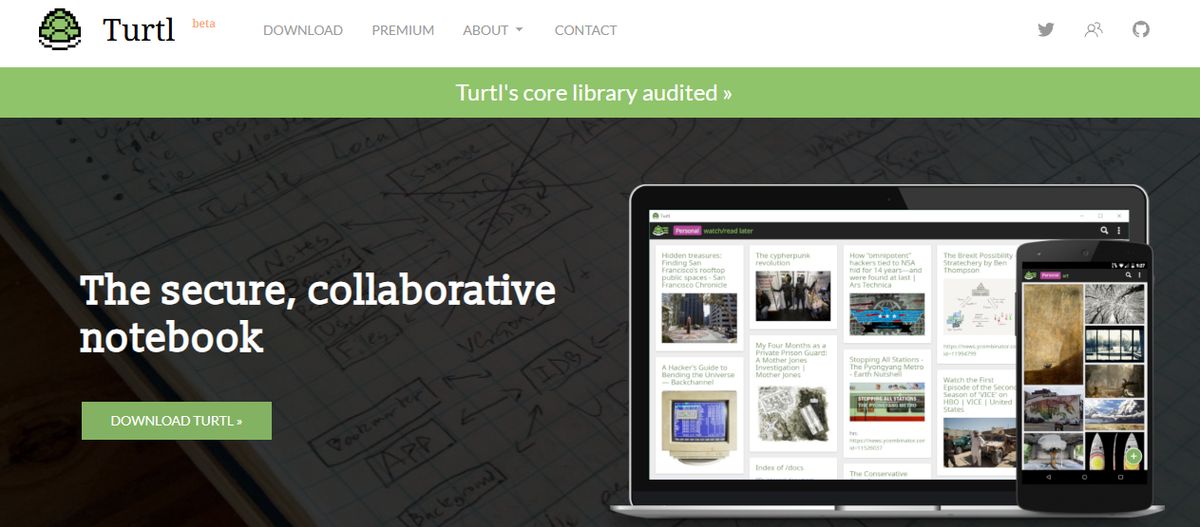
Turtl is an open-source, secure, and encrypted note-taking app focusing on privacy and collaboration. Users can create and organize notes, bookmarks, and passwords in a secure vault and share them with others using end-to-end encryption. Turtl also offers features like tags, search functionality, and synchronization across devices for easy access to information.
Best Features
- Open-source platform for maximum security and privacy.
- End-to-end encryption for sharing notes and collaborating with others.
- Tagging and search functionality for organized and easily retrievable notes.
10. Bloomfire
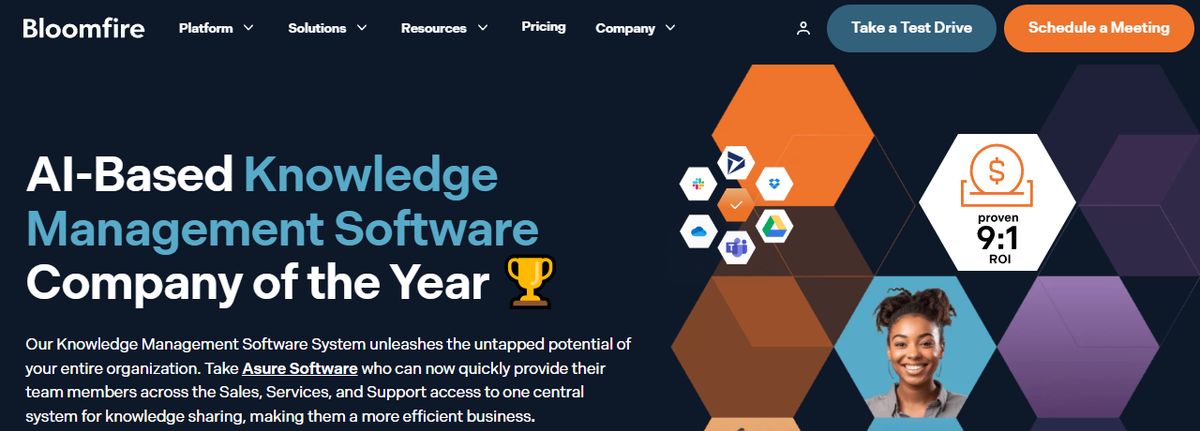
Bloomfire is a scalable AI-driven knowledge management platform for small to multinational enterprises of all sizes. Designed to centralize and democratize information within organizations, the platform helps professionals efficiently gain, organize, and share knowledge. How? Through building secure and searchable repositories. It provides content authoring and moderation tools to ensure only the most relevant and accurate content is published, enabling your teams to make reliable data-driven decisions.
####Best Features
- Find relevant information with the advanced search functionality that indexes every word in all types of content, including videos.
- Promote knowledge sharing and collaboration through interactive discussions and forums.
- Track engagement metrics and gain insights into content performance with the dedicated analytics suite.
Limitations
- The search feature can display too many results, leaving users confused.
- No free trial or version is available.
11. Roam Research
Another great note-taking PKM tool is Roam Research. Popular among researchers, writers, and lifelong learners, this tool is designed for non-linear thinking and idea organization. Roam helps students create a ‘networked thought’ system, connecting concepts and notes to mirror how the brain naturally works. Bidirectional linking on Roam enables you to create a web of interconnected notes and quickly identify relationships between disparate pieces of information.
Best Features
- Generate a daily note to help you keep track of your thoughts and ideas on a day-to-day basis.
- Refer to and reuse pieces of text across different notes.
- Store your notes as plain text files, making reading and sharing them easy.
Limitations
- Roam Research’s design is not aesthetically pleasing.
- Some users may find its pricing costlier than other tools due to the free options.
12. The Brain

The Brain is a dynamic mind-mapping software that allows users to organize and connect their thoughts and ideas visually. Users create a network of interconnected nodes (thoughts) and link them together using relationships like parent-child, sibling, and jump thoughts. The Brain also offers features like tags, search functionality, and visualization options to help users explore and navigate their thoughts.
Best Features
- Visually organize thoughts in an interconnected network.
- Create and customize notes with rich media and links.
- Explore your notes with dynamic visualization options.
13. RemNote
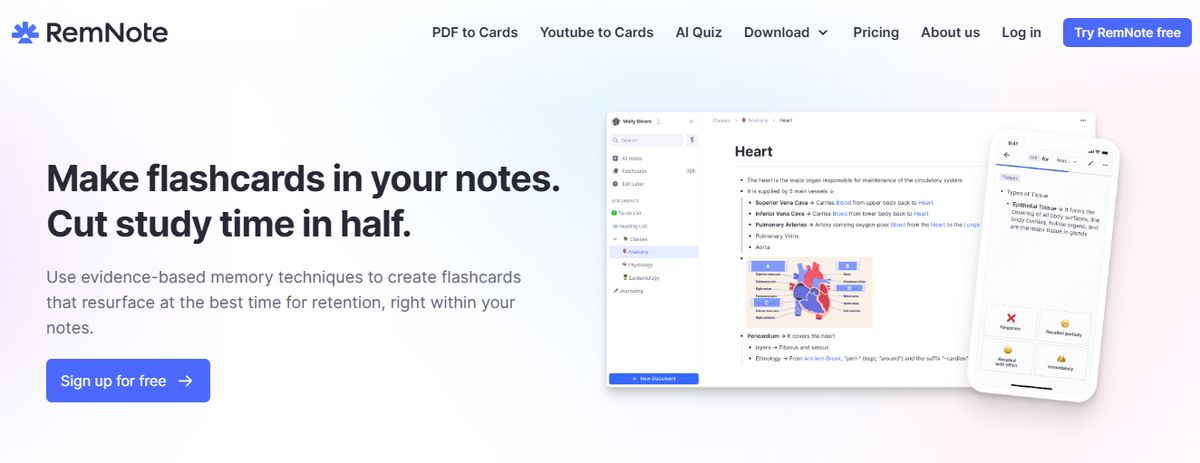
RemNote is a note-taking and knowledge management app that uses spaced repetition to help users retain and recall information more effectively. Users create and organize notes using a hierarchical structure and review them using a built-in spaced repetition algorithm. RemNote also offers features like backlinks, flashcards, and collaboration tools for sharing and editing notes with others.
Best Features
- Hierarchical organization breaks down complex ideas into manageable chunks.
- The Flashcard feature helps users retain key information.
- The spaced repetition algorithm automates review schedules for effective learning.
14. Guru
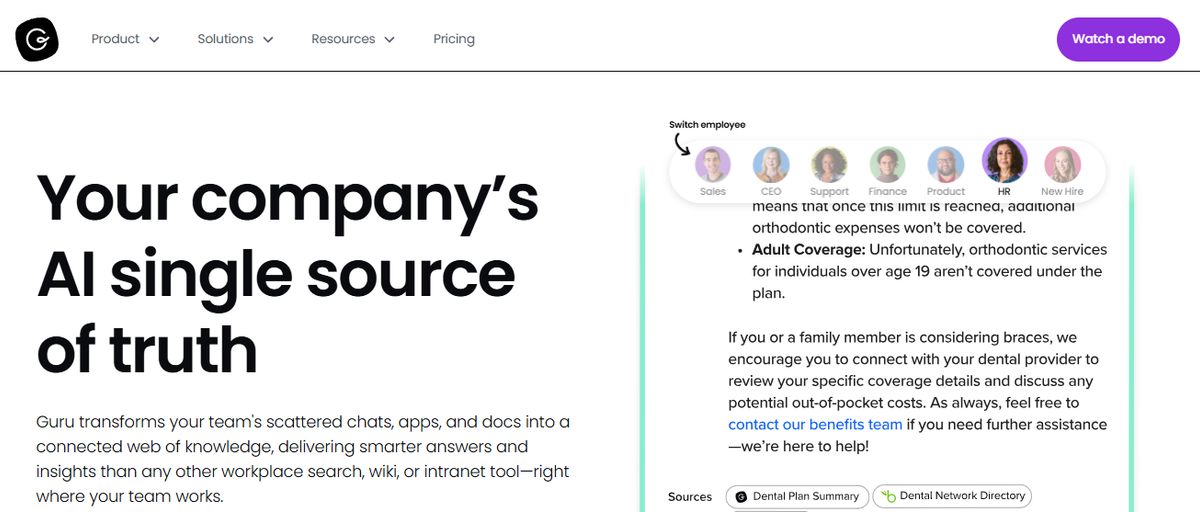
Guru is an AI-powered knowledge management platform that converts your company’s collective knowledge into a single, centralized, and up-to-date Wiki for your employees. The AI search feature provides instant, personalized responses to your employees’ questions, enabling them to get back to their assigned tasks with clarity. Guru allows teams to maintain a single source of truth, ensuring that information is accurate, up-to-date, and easily retrievable—integral to improving operations and making informed decisions.
Best Features
-
Create a personalized intranet that serves as a centralized hub for company information.
-
Connect to your existing apps, chats, and documents through AI.
-
Provides role-based access control functionalities.
Limitations
- Guru provides limited customization options compared to other software.
- There is a chance of outdated or duplicate content with the growth of the knowledge base.
15. Beargle

Beargle is a personal knowledge management tool that combines note-taking, task management, and bookmarking features in a single app. Users can create and organize notes, tasks, and bookmarks in a unified interface and customize them with text, images, and links. Beargle also offers features like tags, search functionality, and synchronization across devices for easy access to information.
Best Features
- Create and organize notes, tasks, and bookmarks in one app.
- Customize your notes with rich media and links.
- Sync information across devices for easy access.
16. Document360
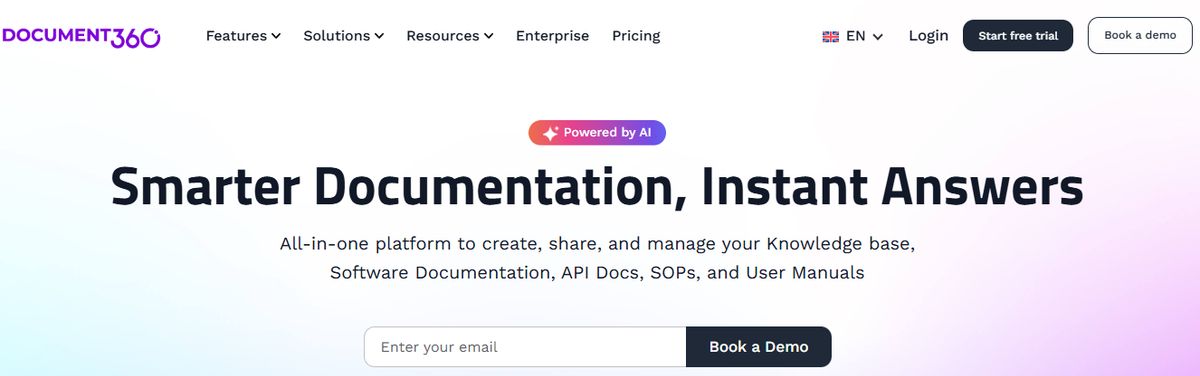
Another all-in-one workspace software for building customizable knowledge bases is Document360. This software helps you personalize your knowledge base with branded colors. It helps create dynamic, searchable, multilingual user manuals, SOPs, how-to guides, and other documents. Ideal for professionals seeking to streamline documentation processes, Document360 offers a user-friendly interface that caters to technical and non-technical users. Plus, it gives AI functionalities to simplify tackling all documentation needs.
Best Features
- Improve the context and relevance of documentation with real-time AI feedback.
- Get insights into user behavior and content effectiveness to optimize knowledge management strategies.
- Connect with popular tools like Slack, Microsoft Teams, Zendesk, and Intercom to build a cohesive workflow across platforms.
Limitations
- A few features are only available through costly add-ons.
- New users might require time to leverage the platform’s extensive capabilities fully.
17. Standard Notes
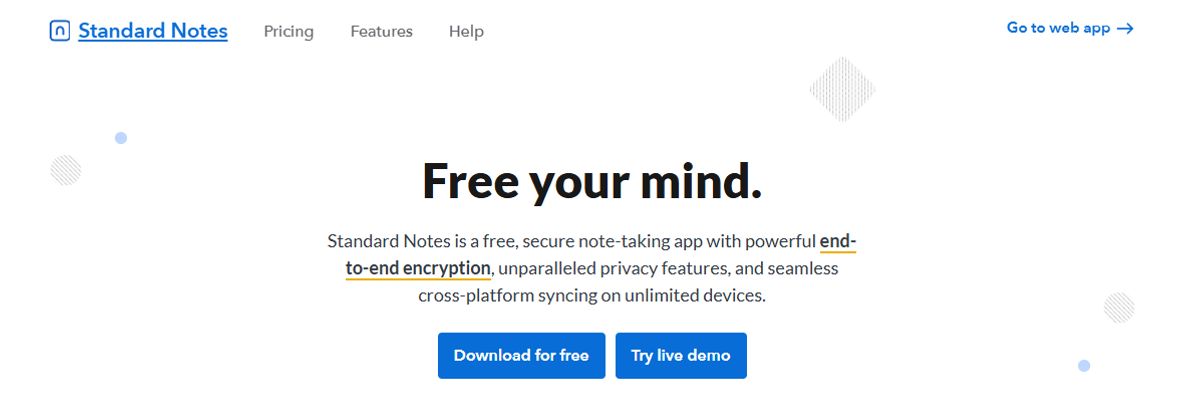
Standard Notes is an encrypted note-taking app that prioritizes security and privacy while offering markdown support and collaboration features. Users can create and organize notes in a secure vault and sync them across devices using end-to-end encryption. Standard Notes offers features like tags, search functionality, and customization options for a personalized note-taking experience.
Best Features
- Strong security and privacy protections for sensitive information.
- Markdown support for easy formatting.
- Sync across devices to access notes anywhere.
18. Dynalist
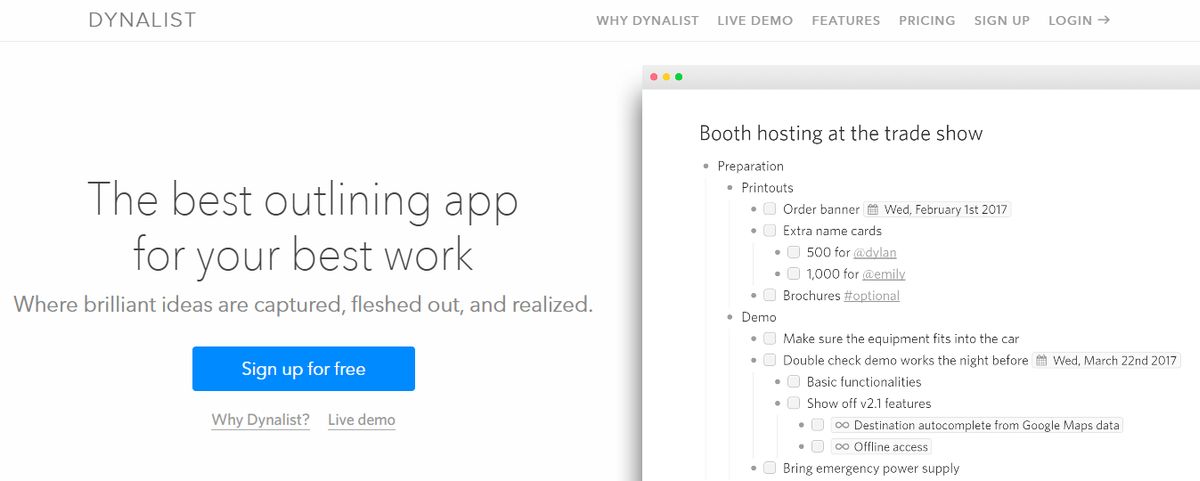
Dynalist is an outlining and organizational tool that helps users capture and structure their ideas, tasks, and projects in a hierarchical format. Users create lists and sublists to organize their thoughts and quickly expand and collapse them as needed. Dynalist also offers features like tags, search functionality, and collaboration tools for sharing and editing outlines with others.
Best Features
- Intuitive outlining interface for easy note organization.
- Supports nested lists for hierarchical note-taking.
- Tagging and robust search functionality.
19. Mem.AI
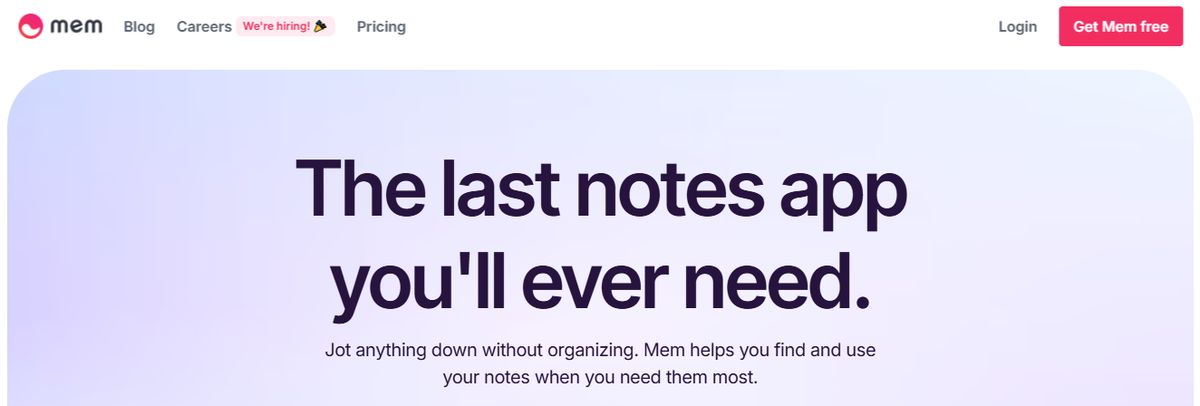
Mem.ai is an AI-powered personal knowledge management tool for researchers, managers, content creators, and entrepreneurs. Think of this AI tool as your assistant—it organizes your notes, summarizes insights, drafts tailored content, and digs up answers to your questions. In addition, the platform integrates with various productivity tools, allowing users to consolidate information from different sources into a unified workspace.
Best Features
- Automatically categorize and link related notes through AI to discover connections.
- Effortlessly retrieve information based on context and content through advanced search capabilities.
- Manage complex information with a user-friendly interface.
20. MyMind
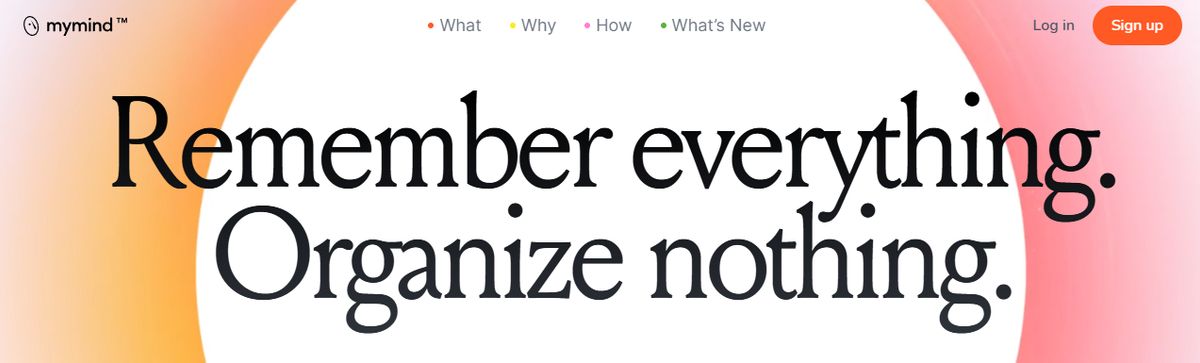
MyMind is a personal knowledge management app that focuses on simplicity and ease of use, allowing users to capture and organize their thoughts and ideas. Users can create notes, lists, and tasks and arrange them using tags and folders. MyMind also offers features like search functionality, customization options, and synchronization across devices for easy access to information.
Best Features
- Simple interface for easy note-taking and organization.
- Automatically categorizes notes and tags for intuitive organization.
- Sync across devices for easy access to information anywhere.
21. Tana
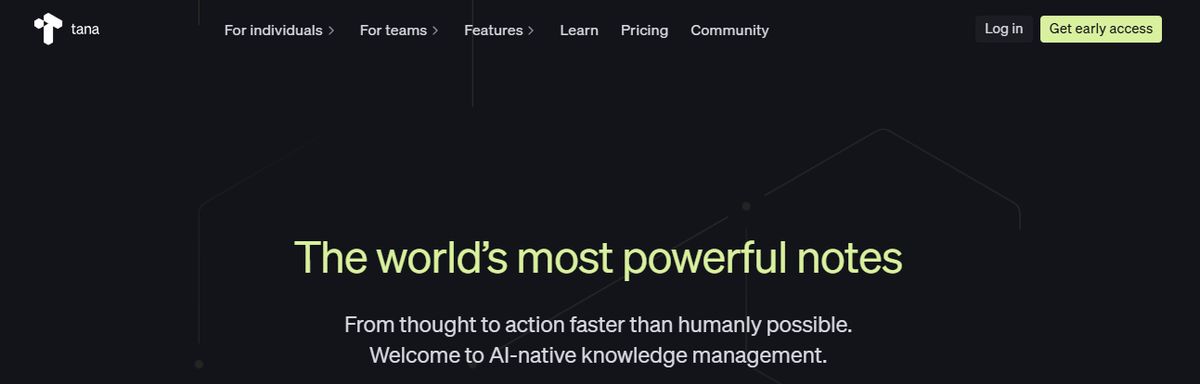
Tana is one of the more advanced PKM tools and has many powers. Tana is a note-taking app focused on system-based organization. It comes with powerful features like supertags, AI abilities & a growing community of users. Features like graph view, superstars, and AI abilities help you better organize PKM notes in one place. Supertags are a unique system in Tana that allows you to apply the power of templates to each of the notes you take.
They allow you to add critical metadata to notes that you can reuse, which makes things easier with search. Many people already use the concept of supertags in apps like Capacities; they are object-like tags that help you reuse certain types of notes for powerful resurfacing.
Best Features
- Supertags let you add metadata to notes for improved organization and search.
- Graph view visualizes note connections for better PKM.
- Integrates with AI for enhanced note-taking capabilities.
22. Logseq
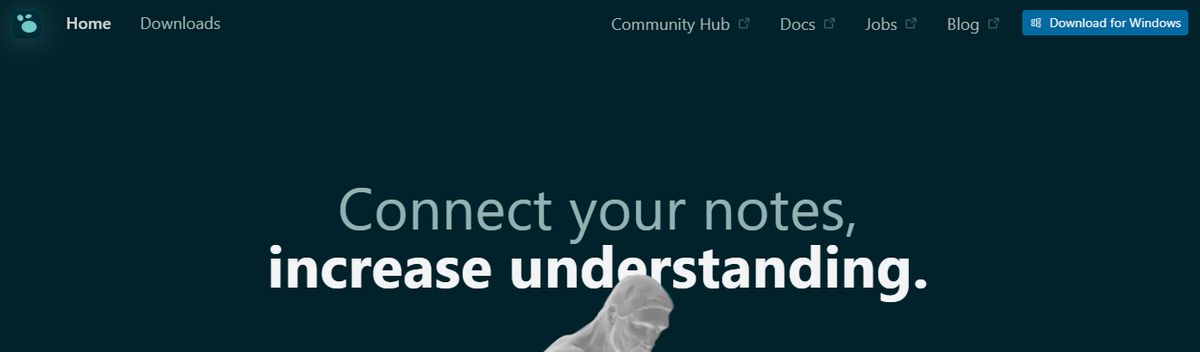
Logseq is an open-source note-taking and knowledge management app that uses a graph database to help users organize and connect their notes. Users create and link notes using markdown and visualize their connections using graph view. Logseq also offers features like backlinks, search functionality, and synchronization across devices for easy access to information.
Best Features
- Markdown support for easy formatting and customization.
- Graph view visualizes note connections for better PKM.
- Backlinks help users create a web of connected notes.
23. Reflect Notes
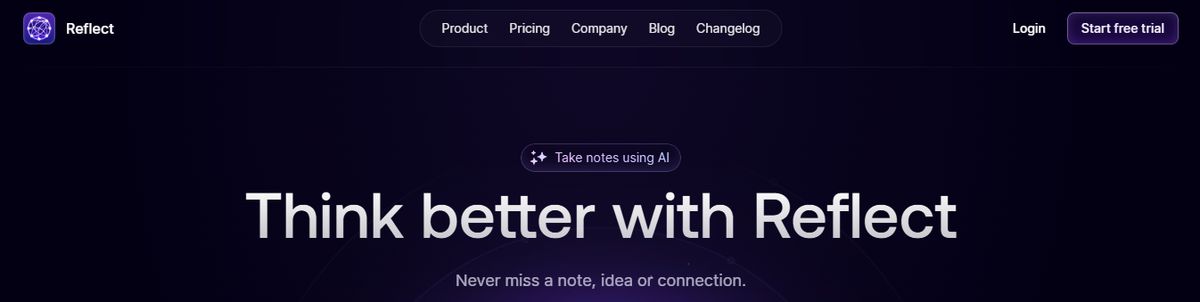
Reflect Notes is a note-taking app that handles notes and tasks and organizes your upcoming meetings from Google Calendar as notes for agendas and more. It is also focused on secure note-taking with E2E encryption. Reflect Notes integrates artificial intelligence to streamline the management of notes, meeting notes, and ideas, making it a brilliant companion for those seeking efficiency.
Its user-friendly design makes the integration of AI into everyday knowledge management smooth and approachable. The AI's ability to provide bright summaries and insights is a game-changer, allowing users to save time while enhancing the overall productivity of their knowledge management efforts. As a PKM tool, Reflect Notes sits between a traditional tool and a PKM app, allowing you to have the traditional feel of Evernote but the power of Obsidian.
Best Features
- AI integration streamlines note management and organization.
- End-to-end encryption for secure notes and collaboration.
- A User-friendly interface makes it easy to manage notes.
24. Heptabase
Heptabase is a visual note-taking app designed to help you bring ideas together in a canvas view. It allows you to add and link notes, which is popular with researchers and students. Heptabase is perfect for visual thinkers & those who want to get into PKM. It balances both worlds well with a canvas mode that allows you to add ideas by dragging them together, much like apps like Miro and Milanote.
Hetpabase even has project management abilities like Kanban views, which people will like if they want more structured ways to manage their knowledge base. It creates a great PKM for visual thinkers and those who like open-plan ways of bringing ideas together. If you're a researcher, student, or visual thinker, Heptabase is a must-try. The application perfectly bridges the gap between handling notes in a PKM style whilst still being able to express them in a whiteboard fashion.
Best Features
- Visual canvas for open-ended idea organization.
- Drag and drop functionality for easy note linking.
- Project management features help structure knowledge management.
25. Capacities
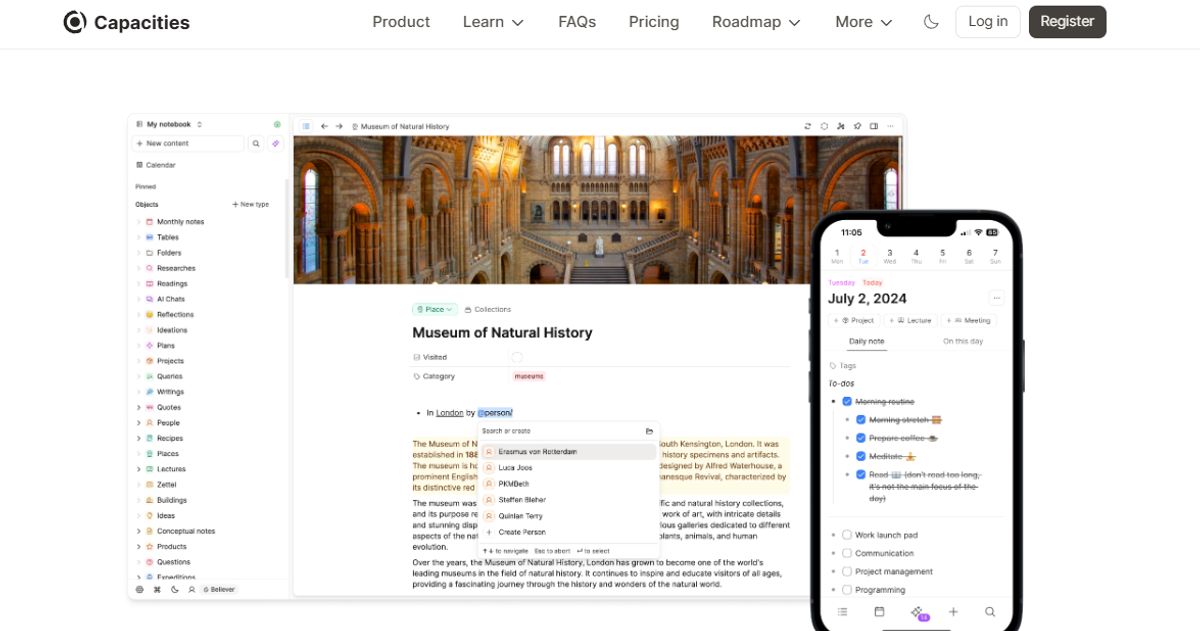
Capacities is a note-taking tool for PKM that uses object types to organize how you structure your knowledge base. It is popular with busy professionals and those who want to manage their notes utilizing this system. Capacities introduce an innovative object-based approach to note-taking and PKM, organizing information around distinct knowledge units or 'objects.'
This approach allows for a more flexible and intuitive way of handling data, appealing to many knowledge workers. Capacities' integrated knowledge framework supports a more holistic view of personal and professional knowledge, making it an ideal tool for those seeking an adaptable and comprehensive knowledge management solution.
Best Features
- The object-based approach helps structure and organize notes intuitively.
- Integrated knowledge framework supports holistic PKM.
- Flexible features appeal to various user types and preferences.
26. Trilium Notes
Trilium Notes is a powerful note-taking and knowledge management app with hierarchical organization, tagging, and rich text editing. Users can create and organize notes hierarchically and link them together using relationships like parent-child and sibling. Trilium Notes also offers features like search functionality, customization options, and synchronization across devices for easy access to information.
Best Features
- Hierarchical organization breaks down complex ideas into manageable chunks.
- Rich text editing for flexible note-taking.
- Tagging and robust search functionality.
27. OneNote
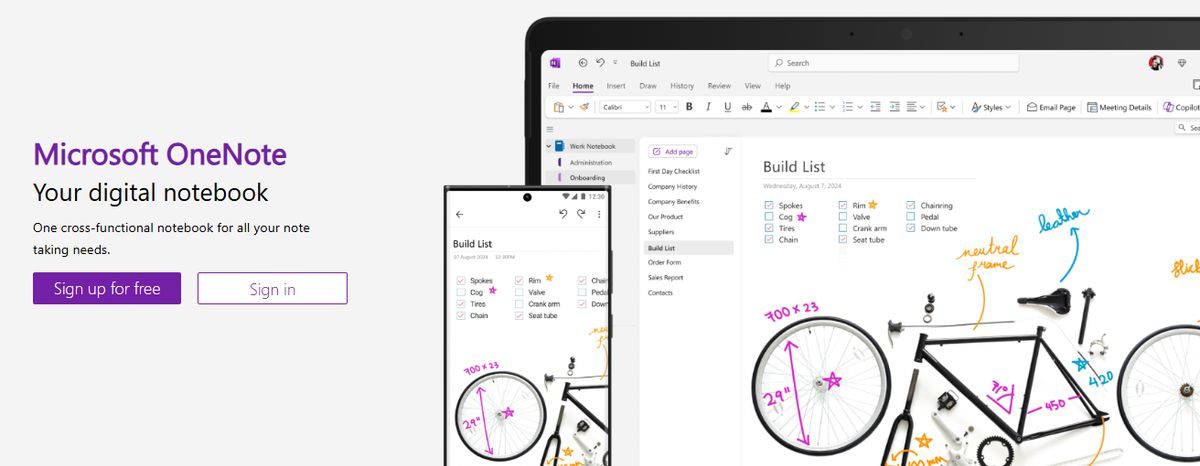
OneNote is a digital notebook app from Microsoft that allows users to capture, organize, and share notes, ideas, and information. Users can create notebooks, sections, and pages to manage and customize their notes with text, images, and more. OneNote also offers features like tags, search functionality, and collaboration tools for sharing and editing notes with others.
Best Features
- Flexible organization with notebooks, sections, and pages.
- Rich media support for customizable notes.
- Collaboration tools for editing and sharing notes with others.
28. QOwnNotes
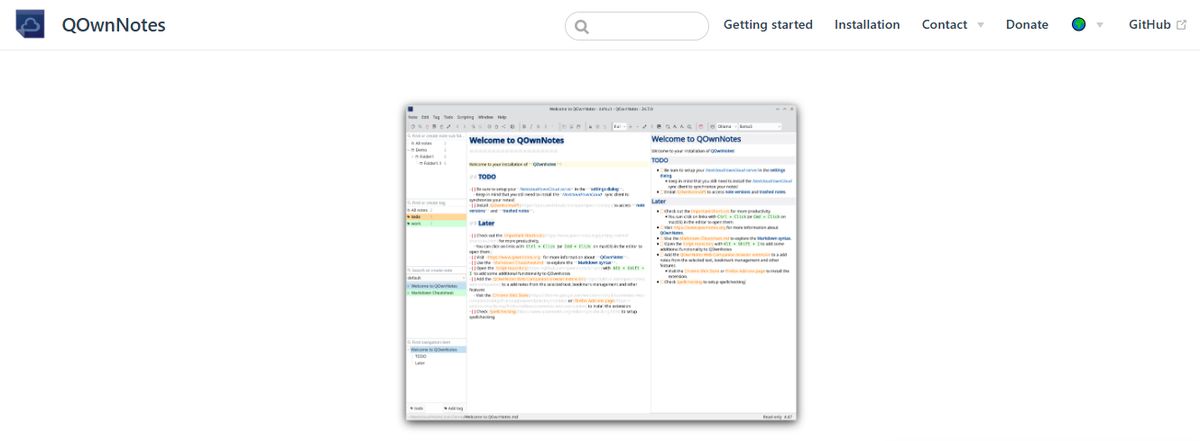
QOwnNotes is a free, open-source note-taking app that offers markdown support, tagging, and encryption features for secure note-taking. Users can create and organize notes using markdown syntax and customize them with tags and categories. QOwnNotes also offers features like search functionality, synchronization across devices, and integration with cloud storage services for easy access to information.
Best Features
- Open-source platform for maximum security and privacy.
- Encryption features protect sensitive information.
- Sync across devices for easy access to notes anywhere.
29. Joplin
Joplin is an open-source note-taking and to-do app that offers end-to-end encryption, synchronization, and markdown support. Users can create and organize notes using markdown syntax and synchronize them across devices using encryption. Joplin also provides features like tags, search functionality, and collaboration tools for sharing and editing notes with others.
Best Features
- Open-source platform for maximum security and privacy.
- End-to-end encryption protects sensitive information.
- Sync across devices for easy access to notes anywhere.
30. WikidPad
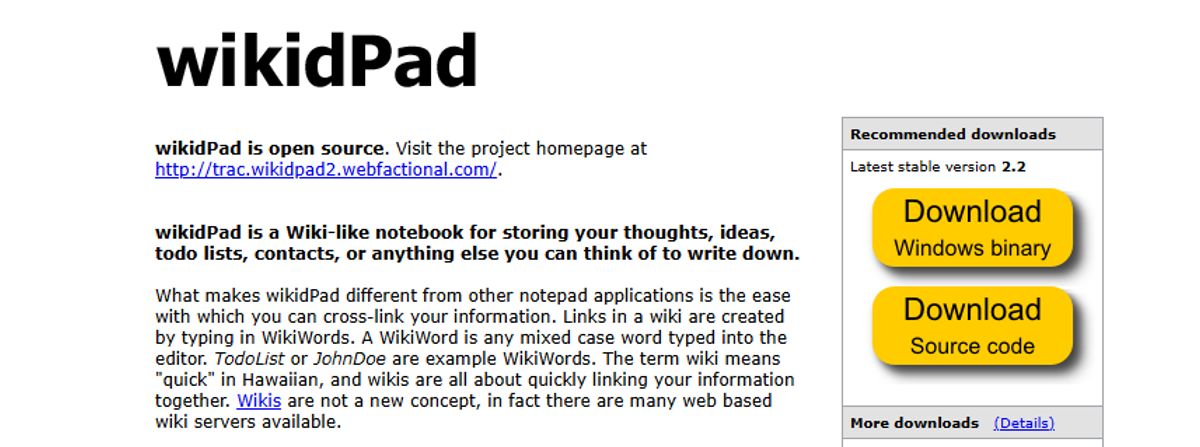
WikidPad is a wiki-based personal knowledge management tool that allows users to create and organize interconnected notes using a wiki-style interface. Users create pages for each idea or information and link them together using hyperlinks. WikidPad offers features like search functionality, tagging, and customization options for a personalized wiki experience.
Best Features
- Create interconnected pages that resemble a traditional wiki.
- Tag notes and use search functionality for the organization.
- Customize your wiki for a personalized knowledge management experience.
Related Reading
- Slite Alternatives
- Roam Research Alternatives
- Joplin Alternatives
- Notion Knowledge Management
- Coda Alternatives
- SiYuan Alternatives
Research 10 Times Faster with Constella
Constella reimagines note-taking with an infinite canvas that lets you capture and connect ideas effortlessly, powered by AI search that makes finding information instantaneous. Whether you're a researcher trying to draw connections across numerous papers or someone who wants a more intuitive way to organize your thoughts and files, Constella's AI assistant helps you build and navigate your knowledge base without the constraints of traditional folder structures.
Constella transforms how you capture, find, and connect your ideas, perfect for busy knowledge workers and researchers limited by conventional note-taking tools. Research 10 times faster with Constella's AI notes manager.
Related Reading
Want more insights like this?
Subscribe to get short productivity tips and useful summaries of new tools every week.
Want more insights like this?
Subscribe to get short productivity tips and useful summaries of new tools every week.


