

You sit down at your desk, clear your mind, and prepare to take notes. But all the various ways you could do this put a damper on your focus. Should you write by hand? Type in a document? Use a second brain code app? Scan my handwritten notes into a document? Create a digital notebook? The options overwhelm you, especially since you know there are different approaches to note-taking and organizing information.
Then, there’s the added pressure of using AI to manage my notes and help me learn. What would help me the most? Notion or Evernote? If you have ever found yourself here, you are not alone. Picking the right note-taking app for you genuinely matters because it can set the tone for your entire process.
This guide walks you through the essential features of Notion and Evernote so you can make an informed choice to help you tackle your unique note-taking goals, like using AI to manage your notes and improve your learning.
An AI notes manager like Constella can help you achieve your note-taking goals in Notion, Evernote, or whatever app you choose.
What is Notion?
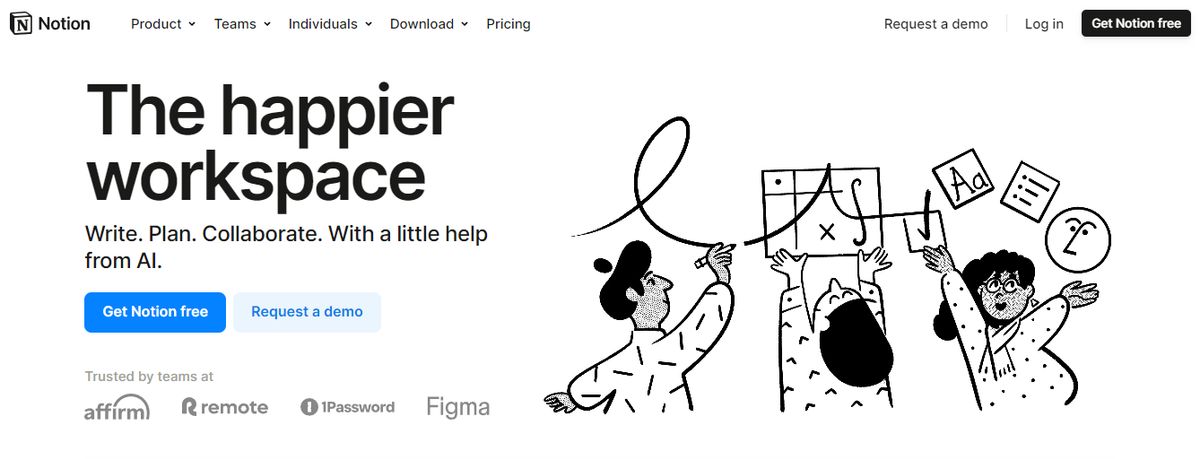
Notion: A Game Changer for Personal and Professional Organization
Notion is a powerful tool that combines the functionality of multiple applications into one customizable interface. This online workspace lets you organize your personal and professional projects in a way that makes sense. Notion’s versatility makes it an excellent choice for individuals, teams, and businesses.
Notion’s features include databases, kanban boards, calendars, and to-do lists. You can create templates or use one of the thousands of premade templates available online. Notion also lets you import and sync data from other platforms, such as Trello and Google Docs, to help you transition to the app smoothly. Notion’s user-friendly interface and customizable structure make creating a personalized hub for organization and collaboration easy.
Notion AI: Your New Productivity Assistant
Notion AI is a robust set of AI features that can be accessed inside any Notion account. To fully understand what the new Notion AI tools can do, you first need to understand Notion itself. Notion was released in 2013 as a customizable online workspace solution. The true beauty of the app lies in its versatility, as it offers useful features for anyone, from students and individuals to entire teams, startups, or existing businesses.
Rather than using multiple tools like Google Docs, Trello, and Hootsuite, you can turn to Notion, where you’ll find the same functions in one dashboard. Notion’s user-friendly functionality makes it easy to achieve multiple tasks, including tracking personal projects, work, or school goals. Use database templates to create anything from lists and budgets to project management dashboards and content calendars.
Use built-in note-taking and scheduling tools Journal or track processes Import data from other programs like Word, HTML, or Google Docs Collaborate with teammates Integrate dozens of different tools like Slack, Zoom, Asana, and Dropbox Notion AI features can help streamline your workflow by creating summaries, answering questions, and automating tedious tasks. Next, we’ll take a closer look at the features Notion AI has to offer and how to access them.
Constella: The Future of Note-Taking
Constella reimagines note-taking with an infinite canvas that lets you capture and connect ideas effortlessly, powered by an AI search that makes finding information instantaneous. Whether you're a researcher trying to draw connections across numerous papers or someone who wants a more intuitive way to organize your thoughts and files, Constella's AI assistant helps you build and navigate your knowledge base without the constraints of traditional folder structures.
Constella transforms how you capture, find, and connect your ideas, making it perfect for busy knowledge workers and researchers limited by conventional note-taking tools. Research 10 times faster with Constella's AI notes manager.
What is Evernote?
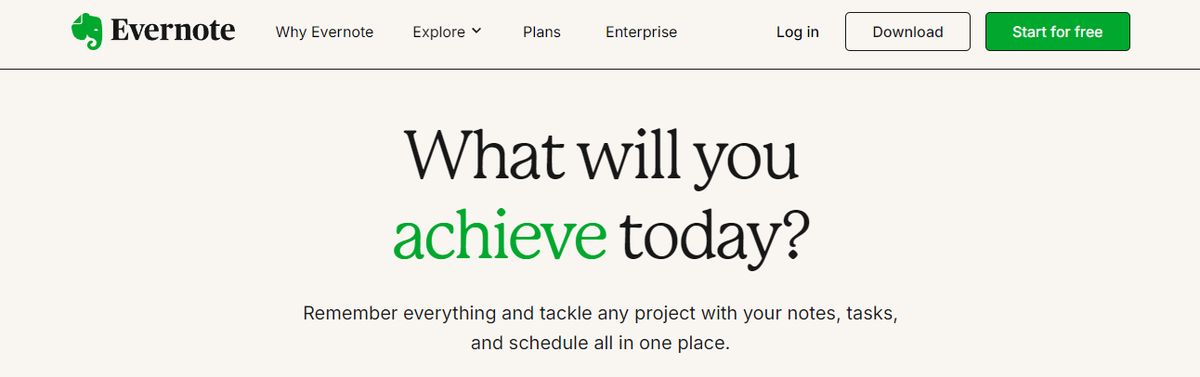
Evernote is a leading application for note-taking. It enables users to store and organize any type of information for both personal and professional use. Evernote allows users to create notes, scan documents, and make to-do lists. The app also lets users attach files to their notes, including audio files, PDFs, and images.
Evernote helps people save and organize information for future use. If you work with others, Evernote has features that allow for the sharing and collaboration of notes. The app also integrates with various tools for a smooth workflow. With an intuitive interface and a rich feature set, Evernote has long been a strong contender in the note-taking space.
Related Reading
- Second Brain Examples
- How to Build a Second Brain
- Tiago Forte Code
- Second Brain Notion Template
- Roam Research vs Obsidian
- Notion vs GoodNotes
Notion vs Evernote Detailed Comparison

1. Core Functionality and Versatility: A Clash of Two Titans
Notion claims the throne as a highly customizable platform that boasts an extensive array of features. It is an all-in-one workspace that integrates note-taking, project management, database creation, and task management. Its block-based system allows users to build customized workflows, incorporating various content types like text, images, tables, etc. This flexibility makes it suitable for multiple applications, from personal journaling to complex project coordination.
Evernote, on the other hand, primarily focuses on note-taking and document organization. It offers features like web clipping, document scanning, and PDF annotation, catering to users who need to collect and organize information efficiently. While it has introduced basic task management features, its strength lies in straightforward note organization.
2. User Interface and Learning Curve: Simplicity vs. Customization
Notion offers a clean and customizable interface, but due to its extensive features and flexibility, it comes with a learning curve. Users may need time to adapt and fully leverage its capabilities. Evernote provides an intuitive and user-friendly interface, making it accessible for users seeking simplicity in note-taking without extensive customization.
3. Task and Project Management: The Verdict
Notion excels in task and project management with features like Kanban boards, calendars, timelines, and customizable templates. These allow users to create detailed workflows and track project progress effectively. Evernote offers basic task management features, such as to-do lists and reminders, but it lacks the advanced project management capabilities found in Notion.
4. Collaboration Features: Working Together
Notion supports robust collaboration with real-time editing, comments, mentions, and the ability to assign tasks, making it suitable for team environments. Evernote allows sharing of notes and notebooks, and recent updates have enabled collaboration without requiring an Evernote account. However, its collaboration features are less comprehensive than Notion's.
5. Integration and Automation: The Potential of Connected Tools
Notion integrates with over 100 applications, including Dropbox, GitHub, and Google Drive, and offers a public API for custom integrations, enhancing its adaptability to various workflows. Evernote provides limited integrations with applications like Google Calendar, Google Drive, and Slack, which may restrict its functionality for users relying on a broader set of tools.
6. Pricing: What's the Damage?
Notion offers a free plan with unlimited pages and blocks for individuals. Paid plans start at $10 per monthly seat and provide additional features like unlimited file uploads and advanced permissions. Evernote provides a free plan with basic features, but advanced functionalities like offline access and increased storage are available in paid plans starting at $10.83 per month.
7. Security: Keeping Your Data Safe
Notion complies with several security standards, including SOC 2 Type 2, ISO, GDPR, HIPAA (with the Enterprise plan), and BSI C5, offering features like two-factor authentication and data encryption. Evernote adheres to GDPR and CCPA, storing customer data in the Google Cloud Platform with encryption. It also offers two-factor authentication and ensures data deletion upon account closure.
10 Best Notion and Evernote Alternatives
1. Constella: Redefining Knowledge Management with an AI-Powered Canvas
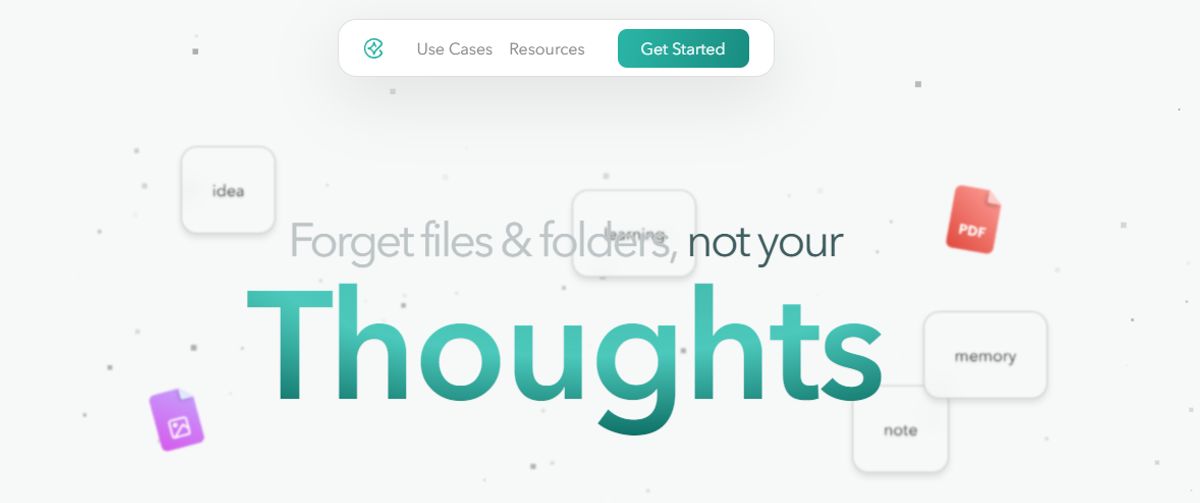
Constella reimagines note-taking with an infinite canvas that lets you capture and connect ideas effortlessly. Whether you're a researcher trying to draw connections across numerous papers or someone who wants a more intuitive way to organize your thoughts and files, Constella's AI assistant helps you build and navigate your knowledge base without the constraints of traditional folder structures.
Constella transforms how you capture, find, and connect your ideas, making it perfect for busy knowledge workers and researchers limited by conventional note-taking tools. Research 10 times faster with Constella's AI notes manager.
2. Document360: Customize Your Knowledge Base
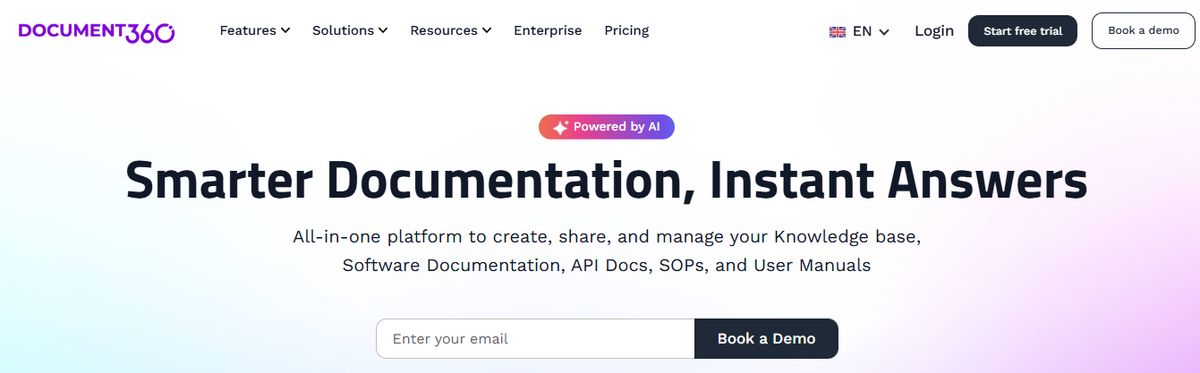
Another all-in-one workspace software for building customizable knowledge bases is Document360. This software helps you personalize your knowledge base with branded colors. It helps create dynamic, searchable, multilingual user manuals, SOPs, how-to guides, and other documents. Ideal for professionals seeking to streamline documentation processes, Document360 offers a user-friendly interface that caters to technical and non-technical users. Plus, it gives AI functionalities to simplify tackling all documentation needs.
Pros
- Improve the context and relevance of documentation with real-time AI feedback.
- Get insights into user behavior and content effectiveness to optimize knowledge management strategies.
- Connect with popular tools like Slack, Microsoft Teams, Zendesk, and Intercom to build a cohesive workflow across platforms.
Cons
- A few features are only available through costly add-ons.
- New users might require time to leverage the platform’s extensive capabilities fully.
3. DokuWiki: A Solid Open-Source Alternative
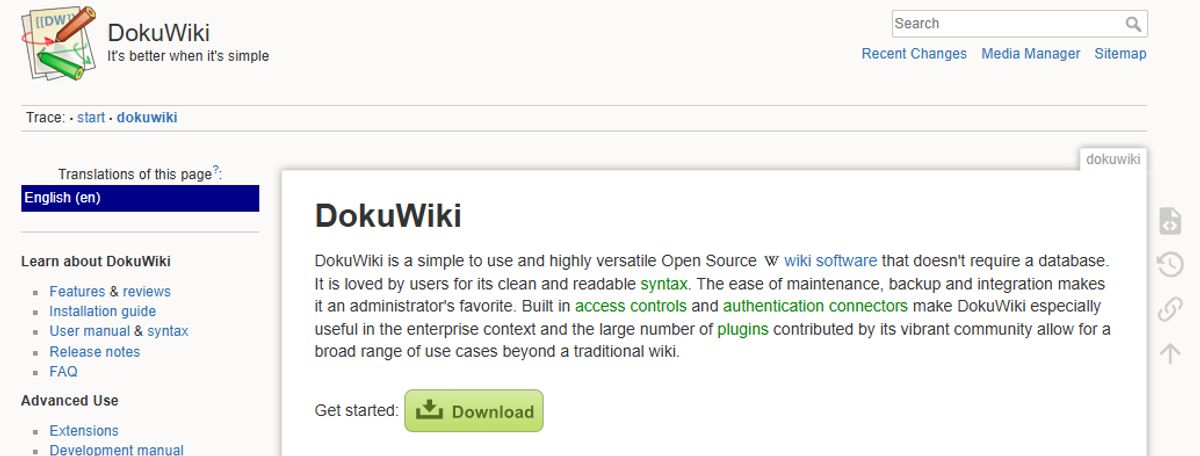
If you’re looking for open-source alternatives to Roam Research, DokuWiki is a great tool that doesn’t need a database. You’ll love the many plugins that extend DocuWiki’s feature set, chipped in by its buzzing community. However, it’s hard to get past its appearance. Visually, you’re stuck with something that looks like it was made when Mac was called Macintosh.
Pros
- Markdown support.
- Tons of plugin options for syntax, admin, etc.
- Templates for layout customization.
Cons
- It can be challenging for non-technical users to onboard.
- The software looks dated, and there are no task management abilities.
4. Microsoft OneNote: A Time-Tested Note-Taking App
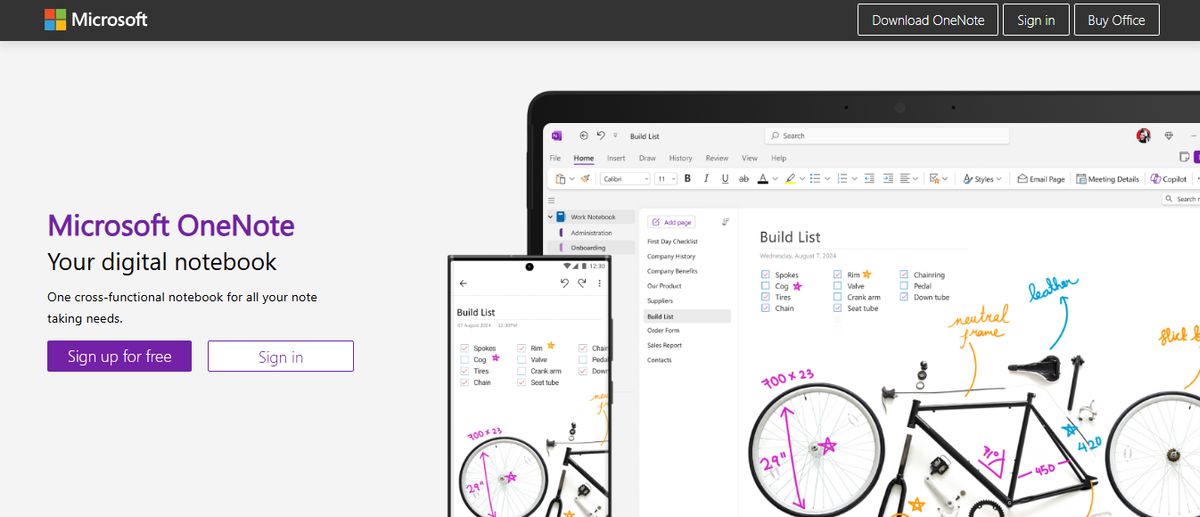
Microsoft OneNote provides note-taking tools for different inputs, including typing, handwriting, and drawing. You can incorporate content from the web directly into your notes, refining the research and documentation process. I’ve always found OneNote’s organization to be great. It’s so simple to get to what you’re looking for with the fewest clicks.
The other thing I love is that the app is less rigid and more fluid across text, numbers, and images. You can quickly add a formula, a table, or an image to the same note. I appreciate the fluidity of this approach—it feels like a natural note-taking and journaling experience. OneNote templates provide a convenient starting point for organizing your notes, whether planning a project, keeping track of tasks, or journaling.
Our team tested its relatively smooth collaboration features. You can work in tandem (on grocery lists, party shopping, or work to-dos) with family members or your team, and your notes get updated in real time. The Microsoft suite’s interconnectedness always makes it its USP and limitation—it depends on who you ask.
Pros
- Recreate the feel of a physical binder with separate sections and pages in the Digital Notebook Layout.
- Convert handwritten notes to typed text.
- Sync your notes across devices and platforms, keeping the continuity of thought intact.
- Access your notes even when you’re offline.
Cons
- Users need to have a Microsoft 365 subscription to access the tool.
- It provides integration mainly with Microsoft products, which is limited for users of other ecosystems.
5. Bear: A Markdown-Based Note-Taking App
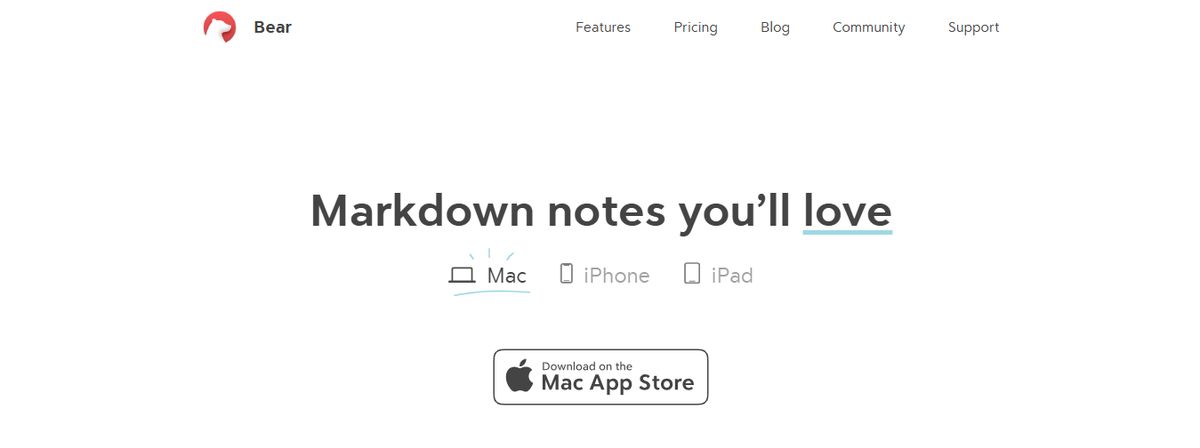
Bear is a Markdown-based note-taking app that allows you to format and organize different types of content (including text, photos, tables, and to-do lists) within a single note. I loved its aesthetics, especially the minimal user interface—it made me feel less anxious when I was toying with the app, even though I had a massive task list to tick off! Bear is available on Mac, iPhone, and iPad. It’s a great choice if you’re more inclined toward the Apple ecosystem and looking for something more visually pleasing than Apple Notes. Opting for the paid version, Bear PRO, unlocks advanced features, such as OCR search capabilities and exporting notes into multiple formats (PDF, HTML, DOCX, and JPG). It’s worth the money if you’re into designing.
Pros
- Format your notes with a simple Markdown.
- Organize notes with flexible tagging systems.
- Use folding to focus on one section at a time and hide the rest.
- Customize the app with beautiful themes.
Cons
- Available only on iOS and macOS, which limits its use to the Apple ecosystem.
- Some basic features, like iCloud sync and exporting options, require a subscription.
6. TiddlyWiki: A Unique, Open-Source PKM Tool
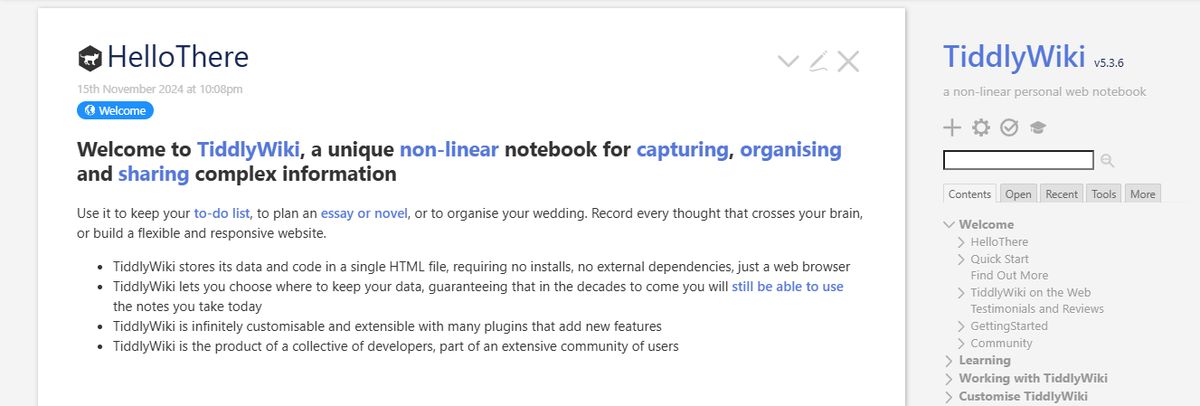
TiddlyWiki is a unique, open-source personal knowledge management (PKM) tool that allows professionals to capture, organize, and share information within a non-linear framework. It helps you plan and manage to-do lists, essays, novels, projects, etc. Functioning as a self-contained HTML file, it operates efficiently across various platforms without complex installations.
Pros
- Use the tool in different languages, with TiddlyWiki offering 20+ languages as plugins.
- Customize and modify the interface and functionality to align with your needs.
- Get help from the vibrant community of users and developers.
Cons
- Real-time team collaboration is an issue because the tool is primarily designed for individual use.
- Task management through big files may create performance issues.
7. Logseq: A Powerful Note-Taking Tool for Organizing Knowledge
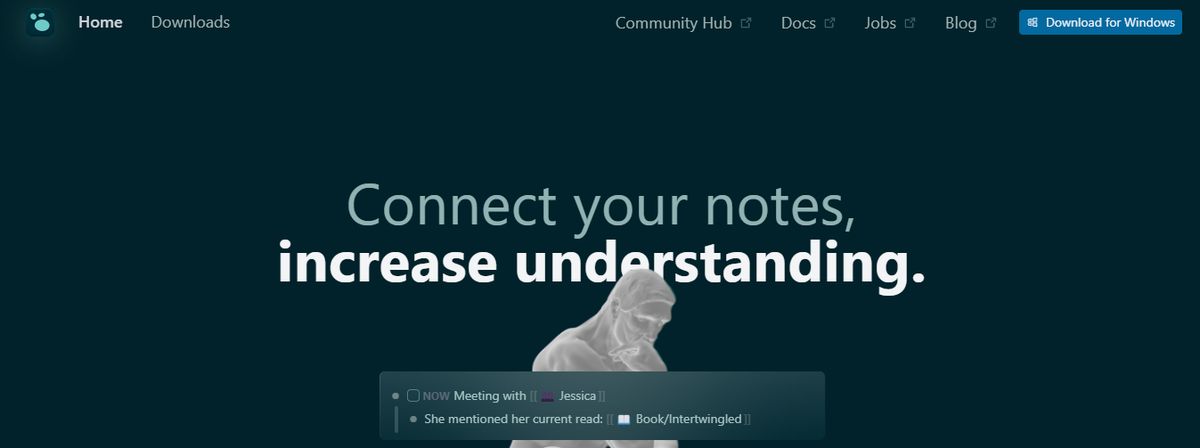
Like most note-taking apps, Logseq is designed to help you organize and manage your knowledge effectively. What sets this AI tool apart is its outline-based structure and linked references that allow you to create dynamic internal links between notes.
For instance, you can link meeting notes to project tasks for smooth tracking. This Logseq feature is excellent for building a personal knowledge graph, visualizing connections between ideas, and structuring tasks or projects.
Pros
- Summarize notes, organize knowledge bases, and optimize workflows with AI tools.
- Organize notes visually with a graph view for better context.
- Manage tasks directly within notes using this markdown note-taking app.
Cons
- It’s not ideal for real-time collaborative editing and teamwork.
- Some users have reported that its built-in sync feature is unreliable, hindering productivity.
8. Joplin: An Open-Source Note-Taking Application
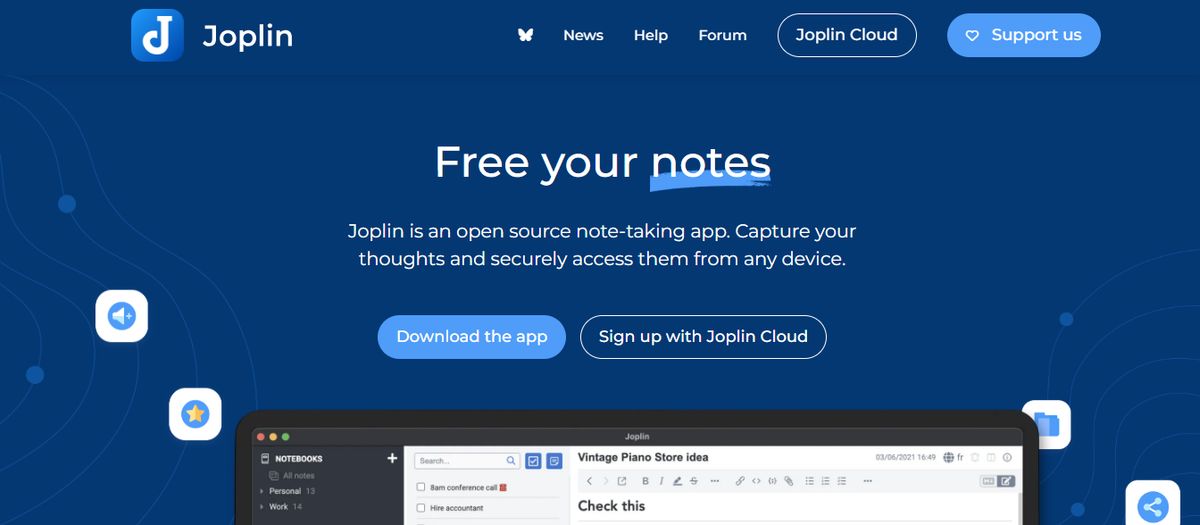
Joplin is an open-source note-taking application that helps you put your thoughts into words and securely access them across Windows, MacOS, Linux, and iOS. The tool supports multimedia notes, including images, videos, PDFs, and audio files. Its sharing and collaboration features are smooth. It allowed me to share my notes with friends, family, and colleagues and work alongside them on the notes without hassle.
There was also an option to save a note (on the internet) and share the link with others—an easy way to share task lists, company wikis, or meeting notes with a large group of people. Joplin offers extensive customization options through plugins, custom themes, and text editors (such as Rich Text and Markdown), ensuring you can tweak the tool to your liking. While it’s an open-source app, it maintains data privacy with End-To-End Encryption (E2EE). Your notes will be accessible only to you unless you choose to share them.
Pros
- Format your notes with Rich Text or Markdown.
- Save web pages or take screenshots directly with the Web Clipper extension (available for Chrome and Firefox).
- Work offline and take down notes on the go.
Cons
- The interface is not as user-friendly as some commercial options, limiting its appeal to less tech-savvy users.
- Syncing requires more setup than other mainstream note apps.
9. Apple Notes: A Simple Yet Efficient Note App
Apple Notes is a simple but efficient note app that works across all devices. This could become your go-to tool if you’re deep into the Apple ecosystem. It’s still the most straightforward app if you work within the Apple realm—summon it anytime on your Mac from the bottom right corner, and it pops up earnestly.
Syncing is great; copying something on the phone and pasting it on your desktop is magic. The little things that boost the experience. Ask more of the app, and you’ll be disappointed. Just moving the text around, formatting, and indenting are not easy. Any more advanced use cases are not supported.
You can save multiple types of content, including images, web links, handwritten notes, maps, PDFs, and sketches. I prefer Apple Notes's scanning feature to scan documents directly from my iPhone—there is no need for third-party scanners! The documents are saved directly within Notes as PDFs.
Pros
- Create notes, edit lists, organize notes into folders, and manage attachments.
- Pin priority notes on top for quick access.
- Add tags to sort and find notes easily.
Cons
- Limited to users within the Apple ecosystem.
10. Obsidian: A Powerful Note-Taking App for Knowledge Management
Obsidian is a note-taking app that is useful for people like me who have hundreds or thousands of notes on their devices. What I love the most about this tool is the interlinking and bidirectional linking—you can connect notes, ideas, people, places, and more. For example, I saved multiple notes on different marketing campaigns, all for the same product. Linking helped me keep everything integrated and access relevant notes quickly.
An interactive graph also identifies hidden patterns within notes and visualizes their relationship. On that note, I’ve been a big fan of Obsidian and Notion. But if I have to assess Notion vs Obsidian head-to-head, I’ll pick Notion any day, as its note-sharing and collaboration features are way smoother. Obsidian is excellent if you want to spend much time using the tool. If you’re looking for collaboration or integration features where you can push out information or tasks to support your productivity workflow, it’s not built for that.
Pros
- Brainstorm, research, and ideate on Canvas, your personal space.
- Track version history of notes for up to one year.
- Curate a personalized experience with plugins and themes.
- Control which files you want to sync with which devices.
Cons
- Collaborating with others on notes is a complex process.
- Primarily a desktop app; the mobile version is not as robust or user-friendly.
Related Reading
- Roam Research Alternatives
- Amplenote vs Notion
- NotePlan Alternative
- Amplenote vs Obsidian
- Heptabase vs Obsidian
Research 10 Times Faster with Constella
Forget everything you know about note-taking. Constella reimagines the process with an infinite canvas that lets you capture and connect ideas effortlessly. You can think of it as a giant digital sheet of paper where you can jot down your thoughts, draw diagrams, create visual maps, and more—without constraints on layout or design. This means you can organize your notes in a way that makes sense rather than conforming to restrictive templates.
To top it off, Constella is powered by AI search, making finding information instantaneous. Whether you're a researcher trying to draw connections across numerous papers or someone who wants a more intuitive way to organize your thoughts and files, Constella's AI assistant helps you build and navigate your knowledge base without the constraints of traditional folder structures.
Constella transforms how you capture, find, and connect your ideas, making it perfect for busy knowledge workers and researchers limited by conventional note-taking tools. Research 10 times faster with Constella's AI notes manager.
Related Reading
Want more insights like this?
Subscribe to get short productivity tips and useful summaries of new tools every week.
Want more insights like this?
Subscribe to get short productivity tips and useful summaries of new tools every week.


